A road trip across Europe offers an opportunity to discover historic cities, picturesque villages, mountain landscapes, and coastal destinations at your own pace. Unlike traveling by plane or train, driving allows you to explore smaller towns and scenic roads that are often overlooked by traditional tourist itineraries.
However, planning a successful European road trip requires more than choosing destinations on a map. Driving regulations, border requirements, toll systems, accommodation, and travel distances all influence the experience.
Choose Your Main Destinations First
Europe contains dozens of countries with different landscapes, cultures, and driving conditions. Trying to visit too many destinations within a limited vacation can turn an enjoyable journey into an exhausting schedule.
Start by selecting several priority destinations and organizing them into a logical geographical route.
For a two-week trip, focusing on three or four neighboring countries may provide a better experience than attempting to cross the entire continent.
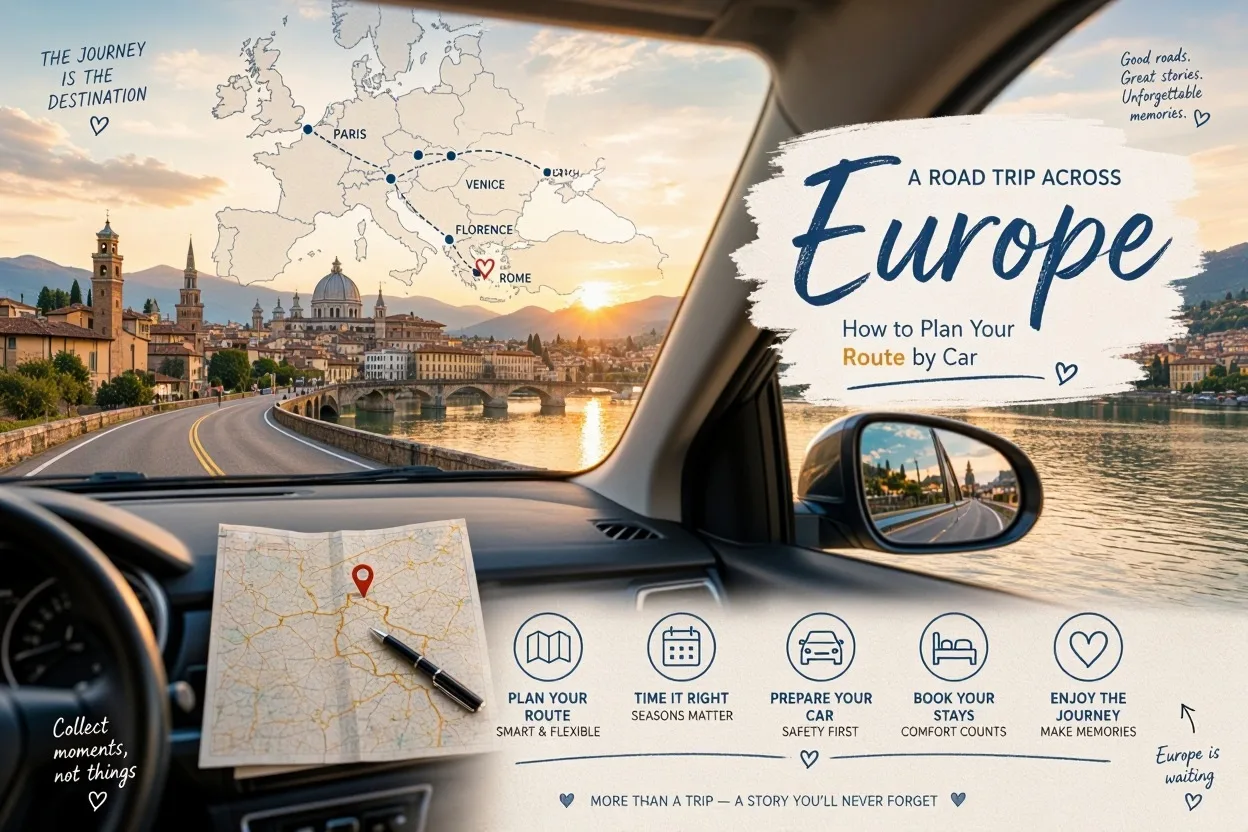
Popular European Road Trip Routes
Several established routes combine attractive scenery with convenient road connections.
Central European Capitals
A journey through Prague, Vienna, Budapest, and Bratislava combines historic architecture, cultural attractions, and relatively manageable driving distances.
The Alpine Route
Traveling through Austria, Switzerland, northern Italy, and southern Germany provides spectacular mountain scenery, lakes, and traditional Alpine villages.
Mountain passes may have seasonal closures, so check road conditions before departure.
The Mediterranean Coast
A coastal journey through southern France, northern Italy, and parts of Spain offers beaches, historic ports, and charming seaside towns.
During summer, however, popular coastal roads can become heavily congested.
Calculate Realistic Driving Distances
One of the most common road trip mistakes is underestimating travel time.
A journey that appears to require four hours on a navigation application may take considerably longer once rest stops, traffic, sightseeing, and parking are included.
For a relaxed vacation, consider limiting most driving days to approximately 200–350 kilometers, adjusting for road conditions and planned activities.
Include occasional days without driving to explore major destinations.
Understand European Border Requirements
Many European countries belong to the Schengen Area, where routine internal border checks are generally absent. However, temporary controls may still occur, and travelers must carry appropriate identification and travel documents.
Countries outside the Schengen Area may have different entry requirements.
Before departure, verify passport validity, visa conditions, vehicle registration requirements, and applicable insurance coverage for every country on your itinerary.
Prepare Your Vehicle for International Travel
Whether driving your own vehicle or renting one, confirm that it is suitable for the planned journey.
Important preparations include:
Popular articles
Saddle Up! Russia’s Best Horseback Riding Tours Vottovaara: Karelia’s Place of Power- Checking tires, brakes, lights, and fluid levels.
- Confirming valid vehicle insurance.
- Carrying required registration documents.
- Checking whether an International Driving Permit is necessary.
- Reviewing mandatory safety equipment rules.
- Confirming cross-border permission for rental vehicles.
Requirements vary by country, so avoid assuming that equipment permitted in one destination satisfies regulations everywhere.
Budget for Tolls, Fuel, and Parking
European road expenses vary considerably. Some countries use motorway toll booths, while others require electronic or physical motorway vignettes.
Fuel prices also differ between countries, and parking in historic city centers can be expensive.
When calculating your budget, include fuel, tolls, parking, accommodation, meals, and a reserve for unexpected expenses.
Book Accommodation Strategically
Accommodation with secure parking can make a road trip significantly more convenient.
In major cities, consider staying near public transportation rather than driving directly into congested historic districts.
Some European cities operate low-emission zones or restricted traffic areas, where unauthorized entry can result in fines.
Check local access regulations before choosing your hotel.
Use Navigation Tools Without Relying on Them Completely
Digital navigation applications help estimate travel times, identify toll roads, and locate fuel stations.
Downloading offline maps is useful when mobile coverage becomes unreliable, particularly in remote mountain regions.
However, navigation software may not always reflect temporary road closures, vehicle restrictions, or seasonal driving conditions.
Consider the Best Season for Your Trip
Spring and early autumn often provide comfortable temperatures and fewer tourists in many European destinations.
Summer offers long daylight hours but also brings increased traffic and higher accommodation demand.
Winter road trips require additional preparation, particularly in mountainous areas where snow tires or chains may be mandatory under certain conditions.
Build Flexibility into Your Itinerary
A successful road trip should leave room for unexpected discoveries.
Allow extra time for scenic viewpoints, local markets, historic villages, and spontaneous stops.
A flexible itinerary also helps accommodate traffic delays, unfavorable weather, or changes in personal preferences.
Conclusion: Plan Carefully, Travel Freely
Planning a European road trip involves balancing ambitious destinations with realistic driving distances, travel regulations, and financial considerations.
By selecting a logical route, preparing your vehicle, researching local requirements, and allowing time for exploration, you can create a journey that is both comfortable and memorable.
The greatest advantage of traveling Europe by car is flexibility: the freedom to discover remarkable places beyond the usual tourist routes.