Tour operators and travellers have faced a difficult few years as the industry has struggled to develop. First came the pandemic and its many restrictions, followed by Western sanctions. But how serious is the situation, and does Russian tourism have a future? Many experts believe there is still reason for optimism, despite the dissolution of Rostourism. Forecasts for travellers and tour operators are largely positive. Let us take a closer look.
Consequences of the dissolution of Rostourism
In October, a decision by the President of the Russian Federation abolished the Federal Agency for Tourism, commonly known as Rostourism. The agency’s dissolution was expected to take six months and be completed by 15 March 2023. Until then, its staff would continue performing their duties while transferring responsibilities to the Ministry of Economic Development.
Deputy Prime Minister Dmitry Chernyshenko commented on the situation. According to him, abolishing the agency would help set clearer priorities for tourism development and allocate resources more effectively.
Chernyshenko also spoke about changes in the structure of domestic tourism. Previously, business trips in Russia outnumbered leisure trips by two to one. The situation has since changed: the number of holidaymakers has increased, while people are travelling less frequently for work.
The Deputy Prime Minister was confident that the dissolution of Rostourism would not affect the level of investment in the industry. Estimates suggested that by 2024, investment over three years could reach $12,500,000,000.
Tourism forecast for 2023: competing for “lazy” travellers
The next season was expected to be mixed. On the one hand, there were serious restrictions and challenges; on the other, remarkable opportunities. Kirill Rozhkov, a professor at the HSE Graduate School of Business, shared his view of the next tourism season in Russia, taking into account the key factors: Western sanctions, which created logistical and financial difficulties, and travellers’ previous experiences. The latter, he believed, would play the decisive role.
Rozhkov believed that 2023 would see competition for “lazy” tourists. This term refers to travellers who enjoy relaxing on the beach and prefer seaside holidays to more active pursuits, such as visiting local attractions. These tourists account for around 60% of the total travel market, a substantial share. Their choices would therefore determine the industry’s overall direction.
The expert did not rule out that in 2023, many travellers who had previously chosen domestic resorts would once again travel abroad for their holidays. The previous season had been affected by extremely high package prices and difficult, lengthy routes, but this was unlikely to happen again. Rozhkov noted that domestic beach holidays lag considerably behind international destinations in terms of comfort. Crowded beaches, high room rates and poor service mean that travellers accustomed to holidaying abroad would be unlikely to accept such a compromise again. He concluded that the sharp rise in “lazy” tourists at domestic beaches seen in 2022 would not be repeated, for fairly objective reasons.
However, the expert saw new opportunities in another area: sightseeing tourism, also known in the industry as “curious” tourism. It is aimed at young people who want to learn more about the country and explore every corner of it. Yet there are challenges here as well. Many tours and programmes were designed for international visitors, while today’s young travellers can easily visit the best-known attractions on their own. More imaginative options are needed, but that will take time.
Overall, Rozhkov’s forecast for 2023 was mixed. He expected domestic tourism numbers either to rise slightly or decline only marginally.
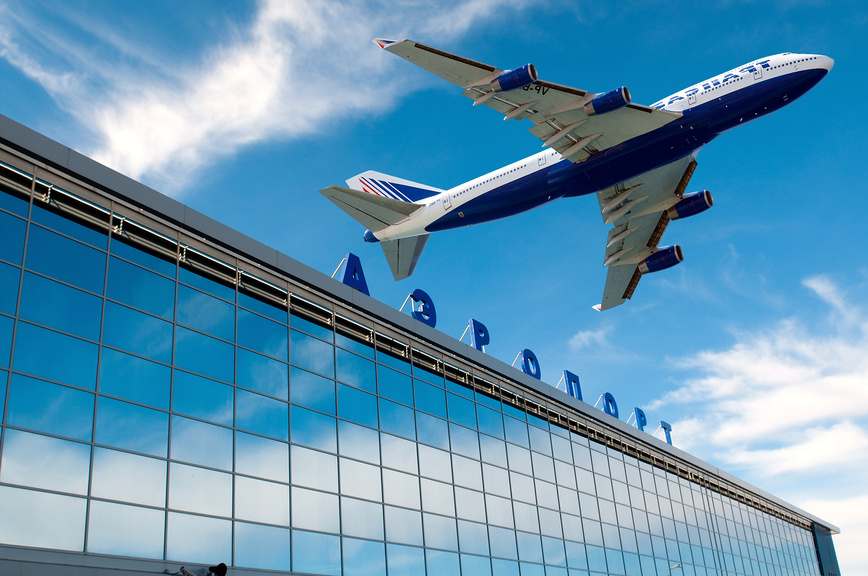
Countries where Russian travellers could holiday in 2023
Popular articles
Saddle Up! Russia’s Best Horseback Riding Tours Vottovaara: Karelia’s Place of PowerTourism expert Roman Gareev spoke about trends expected to remain relevant over the following years. He noted a significant decline in interest in holidays in Europe, influenced by Western sanctions. EU countries suspended the simplified procedure for issuing Schengen visas, resulting in longer application processing times. The visa fee also more than doubled, rising from €35 at the beginning of 2022 to €80. All of this discouraged Russian tourists from relaxing on the beaches of Spain, Italy and Greece. As a result, these countries were expected to receive very few travellers from Russia during the summer season.
Roman Gareev suggested that the Baltic states and Poland would be among the least accessible destinations for Russian travellers. The United Kingdom, the Czech Republic, Bulgaria, Moldova, Slovakia and Slovenia could also join them.
Destinations open to Russian travellers were expected to become more popular. The most convenient and accessible options would be countries in the Middle East. Turkey, Egypt, Cyprus, Israel, Saudi Arabia and the UAE were considered the most attractive destinations.
Southeast Asia was expected to be slightly less popular among Russian travellers. Tourists from Russia often booked holidays in Vietnam, Singapore, Indonesia and Thailand.
Gareev also highlighted countries in Africa and Latin America that were ready to welcome Russian visitors. While these destinations had not been especially popular with travellers from Russia over the previous 20 years, they should not be overlooked.
The leading destinations for Russian tourists in 2023 were expected to be Georgia, Turkey, Thailand, Iran, Armenia, Azerbaijan and Laos.

Forecast for the next 5 and 10 years
Russian tourists were experiencing some difficulties when choosing a holiday destination, but this could soon change. Sebastian Ebel shared his forecast at the Travel Talk congress. The CEO of TUI Group spoke about how he saw the future of tourism in Russia. He expressed confidence that Russian citizens would once again be able to travel freely around the world from 2025, although the following two years would be challenging in this respect.
Russia has a tourism development strategy running until 2035. However, it was adopted in 2019, before the pandemic, the energy crisis and Western sanctions. Officials have already adjusted their targets to account for these limiting factors.
The project is aimed at developing both inbound and domestic tourism. Its main goals have also been defined. The priority is to create a tourism product capable of competing with more popular options, meaning holidays abroad. To achieve this, the following measures are planned:
- developing tourism infrastructure;
- improving transport accessibility;
- raising service standards and staff qualifications;
- increasing investment appeal;
- developing and improving digital services;
- gradually removing administrative barriers.
The strategy also highlights the need for more detailed industry statistics. This is important for government representatives and market participants alike.
The strategy’s targets were revised, and officials now aim to triple domestic tourism numbers. By 2035, the authorities want the number of tourists to reach around 144 million. Time will tell how realistic this figure is.