Japan is often associated with the modernity of its major cities, the traditions preserved in its temples, and the natural landscapes of its four main islands. Yet the Japanese archipelago includes countless smaller islands, many of which protect almost untouched nature, with landscapes ranging from Caribbean-like beaches to lush, humid forests.
Some of Japan’s islands are covered in lush forests, while others seem to recreate the tropical paradise of French Polynesia. Yet one thing remains true... tradition, nature and wild beauty can all be found on these islands waiting to be explored.
The Kerama Islands are part of the Okinawa archipelago in southern Japan and consist of 22 islands, only 4 of which are inhabited. One of them is Zamami, home to fewer than 1,000 people. Its coastal scenery recalls French Polynesia, with white sands and water so vividly coloured that it has earned the nickname “Kerama Blue.” On beaches such as Furuzamami, rich marine life draws both diving enthusiasts and whale watchers.
Sado Island, located off the coast of Niigata Prefecture in the northwest of the country, has rugged terrain and can be explored by car or bicycle—if your legs are up to the challenge—to visit its beautiful beaches.
The island also boasts mountainous scenery with terraced rice fields cultivated on its slopes for centuries. Sado is one of the few places where the tradition of gold panning still survives, and it is also the birthplace of the renowned Kodo ensemble, famous for its performances on traditional Japanese taiko drums.
An onsen, or hot spring, is one of the best ways to end a visit to the island, accompanied by Niigata’s famous rice and local sake.
The next island is one of the most remote in the Okinawa archipelago. In fact, it is much closer to the coast of Taiwan than to Japan’s main islands. Iriomote Island lies in one of the country’s most rural areas, with much of its surface covered by dense, humid mountain forests.
Hoshizuna Beach is home to the remains of protists known as foraminifera, tiny yellow star-shaped organisms. Look closely and you may spot star-shaped grains of sand left behind by millions of minute foraminifera remains.
Popular articles
Vottovaara: Karelia’s Place of Power In the Footsteps of Frozen: Countries and Landmarks That Inspired the Film’s CreatorsOn Iriomote, you can hike—though not without some effort—to discover waterfalls, or kayak through the island’s mangrove forests. Just around the corner lies Yubu Island, separated by only a strip of sand that can be crossed in a water-buffalo cart, as it has been for hundreds of years.
At the western edge of the Ōsumi Islands, in the far south of the country, lies an island that has become a hotspot for space exploration enthusiasts.
The Tanegashima Space Center, operated by the Japan Aerospace Exploration Agency, is located on Tanegashima, where rockets carrying satellites are launched into space—an impressive spectacle as their flashes reflect over the East China Sea.
The first firearms made in Japan were named after Tanegashima. They were inspired by arquebuses, long guns introduced to the island by Portuguese sailors in the 16th century.
The island’s west coast has 12 kilometres of beaches. One of them, Nagahama, is known for its white sands and Polynesian feel, and is a nesting site for sea turtles. To the east, Kumano Beach and Chikura Cave are recommended to visit at low tide.
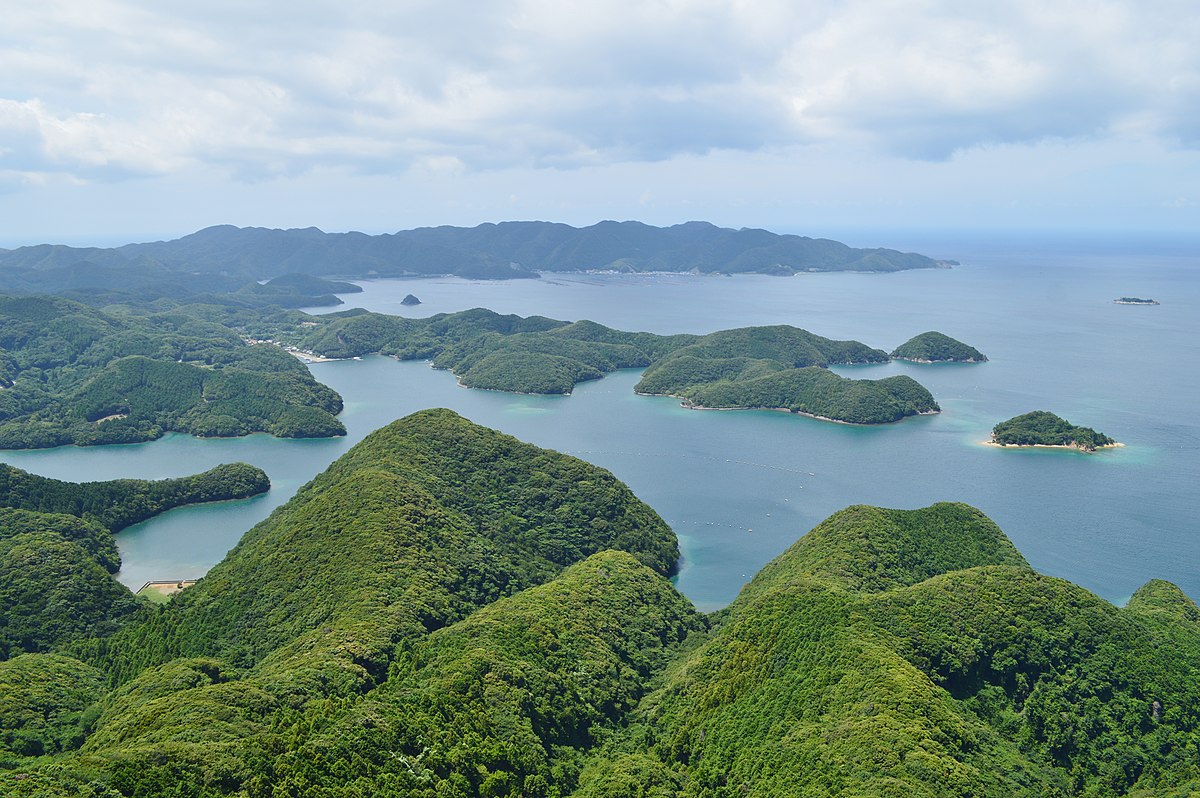
North of Nagasaki, halfway between the Korean Peninsula and Japan, lies Tsushima Island: a nature reserve that still retains 90% of its extensive forest cover.
The island is home to the Tsushima leopard cat, one of the most endangered species, while its flora and fauna can be seen at the Wildlife Conservation Center in Saozaki Park.
The island is also known for its rokube noodles, made from sweet potato starch, and video game enthusiasts will recognise its landscapes as the inspiration for Ghost of Tsushima, released for PlayStation that summer.