Japan is a true blend of tradition and cutting-edge technology. To get to know this destination better, visit some of its most remarkable places. They reflect Japanese culture and reveal far more than first meets the eye. Read our guide to the Land of the Rising Sun’s must-see sights.
Fuji-Hakone-Izu National Park
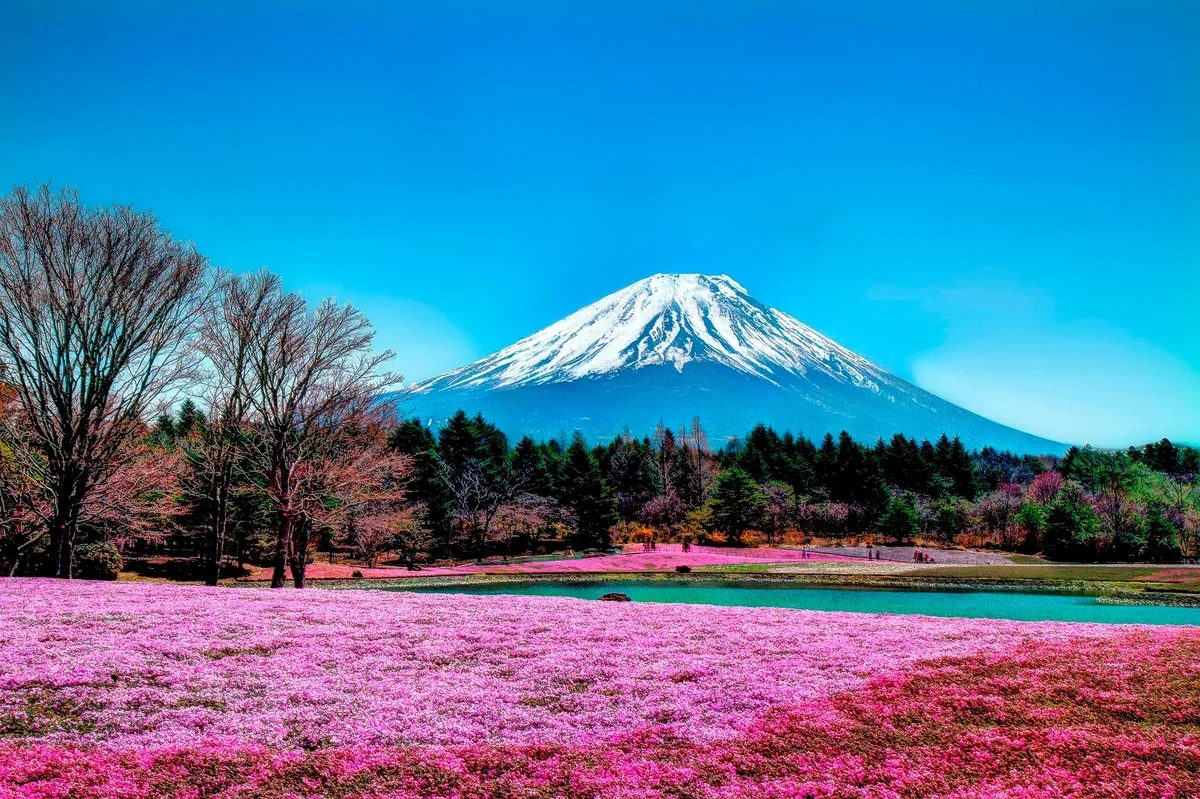
Hakone is a resort area located less than 100 kilometres from Tokyo. The park’s main attraction is Japan’s national symbol, Mount Fuji. It is often featured in images of Japan. Thanks to the area’s volcanic origins, there are many hot springs here. Five mountain lakes are surrounded by hills covered with coniferous forests.
Visitors can admire the botanical gardens, explore an open-air sculpture museum, go fishing or diving. Travellers also visit the ancient Hakone Shrine, founded in the eighth century. It is dedicated to the nine-headed dragon, whose spirit is said to live in Lake Ashi. A small annex houses a treasury of historical relics, samurai weapons and private letters.
Miraikan Museum of Emerging Science and Innovation in Tokyo
People visiting Tokyo for the first time often feel as though they have arrived in the future. The museum’s interactive exhibits only reinforce that impression. Electronic guides are available in six languages, and guests can get around on Segways—two-wheeled electric vehicles. At the centre of the hall is a seismological station that vividly demonstrates Japan’s frequent earthquakes.
The museum’s symbol is the famous ASIMO robot. It can interact with visitors and even play football with them. It recognises objects and surfaces, allowing it to move safely around people. It can also interpret gestures, responding to commands given not only by voice but by hand signals as well.
Tokyo Skytree in Tokyo
Tokyo Skytree is the world’s tallest tower. This architectural landmark is made of glass, concrete and metal. Around half a million people worked on this ambitious project. With no open-air platforms or balconies, visitors take photographs through the glass, creating the impression that all of Japan’s capital could fit in the palm of your hand.
The observation decks can accommodate up to 2,000 people at a time. The tower was designed with a special system that can absorb up to 50% of the force of an earthquake. It has two illumination patterns: sky blue and purple. At the foot of the tower is a complex with a large shopping area, aquarium and planetarium.
Popular articles
Vottovaara: Karelia’s Place of Power Tourist Season 2020: When Does It Open and What Are the Prospects?Snow Monkeys in Nagano
The Snow Monkey Park is located in the Yokoyu River valley and is home to around 160 macaques. The opportunity to observe monkeys in their natural habitat, among steep cliffs and dense forests, makes this place truly unique. Local macaques can comfortably withstand temperatures as low as –15°C.
During the warmer months, the animals travel through the forest from tree to tree. In winter, they warm themselves in the steam rising from the thermal springs. The park offers a chance to observe the macaques in their natural surroundings. Visitors may film and photograph the monkeys, while keeping a respectful distance.
Golden Pavilion in Kyoto
This Buddhist temple is a true treasure house of cultural heritage. The original Golden Pavilion was built in 1397 and is renowned for its luxury and splendour. It is covered in gold leaf, and its roof is crowned by a phoenix figure symbolising rebirth. The first floor serves as a reception hall and contains statues of Buddha and shogun Ashikaga Yoshimitsu.
The second floor was intended for poetry readings and music, while religious ceremonies are held on the third. The pavilion is surrounded by a garden, where some trees were planted as early as the 14th century. Nearby is the picturesque Kyōko-chi Pond. Its name translates as “Mirror Pond”, as its waters reflect the full beauty of the temple.
Nara
Nara was Japan’s first permanent capital, from 710 to 794. It is also known as the city of deer, with several thousand animals wandering peacefully through its streets. Deer crackers are sold on many corners for visitors to feed them.
It is a treasure chest of architectural monuments and artistic masterpieces. According to ancient beliefs, Japan’s first emperor descended from heaven on a deer-drawn carriage. A true historical landmark is Tōdai-ji Temple. Work on its 15-metre Buddha statue took almost 10 years and nearly exhausted the country’s bronze supplies.
The Sarusawa-ike Pond is home to many turtles, which love crawling onto the shore to bask in the sun. The city also has a mascot: a boy with deer antlers, created in 2010 during Nara’s anniversary celebrations.
The Amazing Naruto Whirlpools
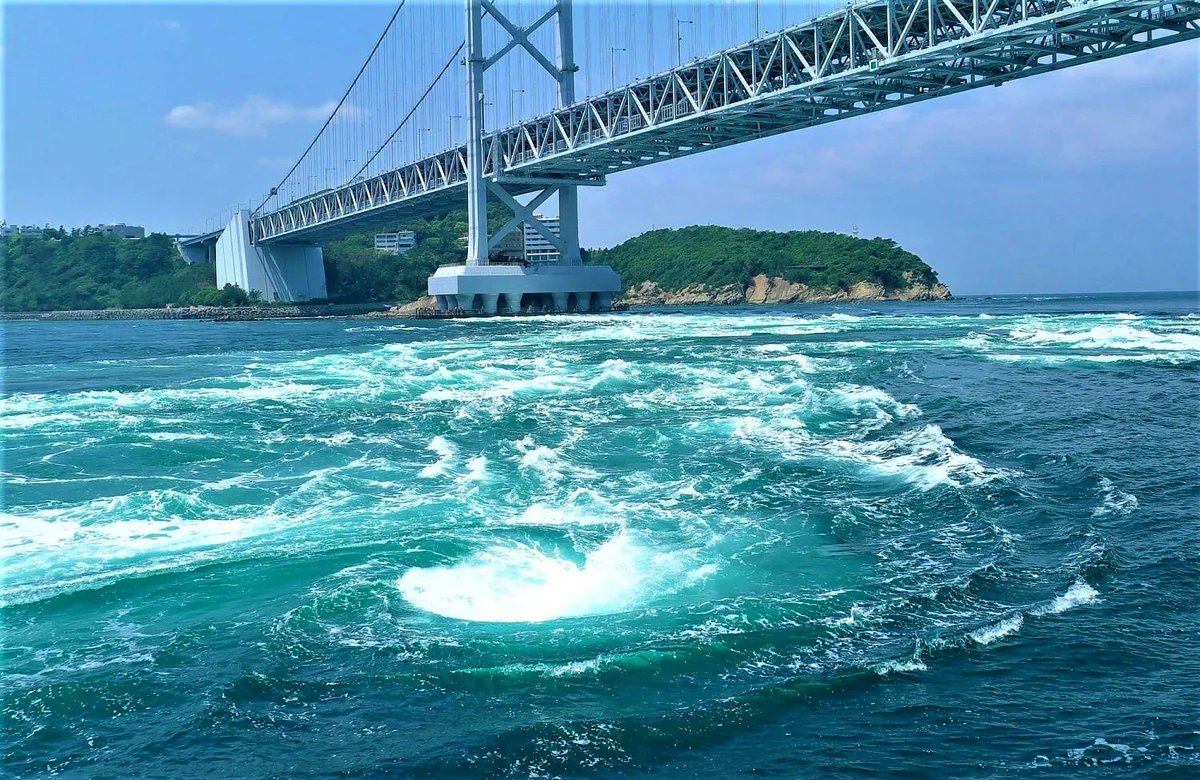
The whirlpools are remarkable for appearing with impressive precision and regularity: they form in the waters every six hours, driven by the tides. Currents here can reach speeds of up to 15 metres per second, creating one of Japan’s most spectacular natural phenomena.
For convenience, the practical Japanese built a suspension bridge, which became an attraction in its own right thanks to its impressive length. The whirlpools can be admired from sightseeing boats with specially designed glass bottoms. The best view opens from the observation deck beneath the bridge.
Sankeien Garden
This vast Japanese-style park is located in the southern part of Yokohama. Along with traditional buildings, it features a pond, bamboo grove, walking paths, a variety of flowers and numerous bridges. What could be more classically Japanese?
Cherry blossoms bloom in March, while hundreds of lotuses open across the pond’s surface in July. As early as February, visitors can admire the flowering ume, or Japanese plum. Architectural highlights include tea houses, a three-storey pagoda from an old temple, and the residence of Tomitaro Hara with dozens of spacious rooms. Anyone can explore the setting in which a wealthy farming family lived in the 19th century.
The so-called “collection of buildings” was literally moved here from different parts of Japan. As most of the structures were wooden, transporting them was not particularly difficult.
Ultra-modern Tokyo blends harmoniously with the scenic countryside, while Fuji’s snow-capped peak complements the blooming cherry trees. Japan is a place you could explore endlessly.