Traveling with a pet requires a bit more preparation than a standard trip. In addition to clothes, documents, and personal items, you need to arrange for food, water, a carrier, and supplies for the animal's hygiene and safety. Even a short trip can become stressful if essential items are left behind.
The best way to avoid unpleasant situations is to start preparing early and create a separate checklist specifically for your pet. That way, before you leave, you simply need to check off each item rather than trying to remember everything at the last minute.
Start with the paperwork
Before traveling, you need to find out what documents are required to transport your pet. Requirements can vary depending on the destination country, the mode of transport, and the length of the journey.
Some trips may require a veterinary passport, vaccination records, identification details, and specific veterinary certificates. International travel usually involves stricter requirements, so it is important to check them well in advance.
- Veterinary passport.
- Records of required vaccinations.
- Pet identification details.
- Veterinary certificates, if required.
- Owner's documents and booking confirmation.
It is a good idea to take photos of the documents and save them on your phone. However, digital copies do not always replace the originals, so it is best to keep the paper documents in an easily accessible place.
Choose the right carrier
The carrier must be appropriate for the animal's size and the conditions of transport. Your pet should be able to lie down comfortably and shift its position, within the limits allowed by the carrier's design and the transport provider's rules.
Before the trip, it is advisable to let your pet spend short periods of time in the carrier at home.
This helps reduce stress and allows the pet to get used to the new space.
You shouldn't use the carrier for the first time right before setting off. If the animal perceives it as an unfamiliar and unpleasant object, the journey could become much more difficult.
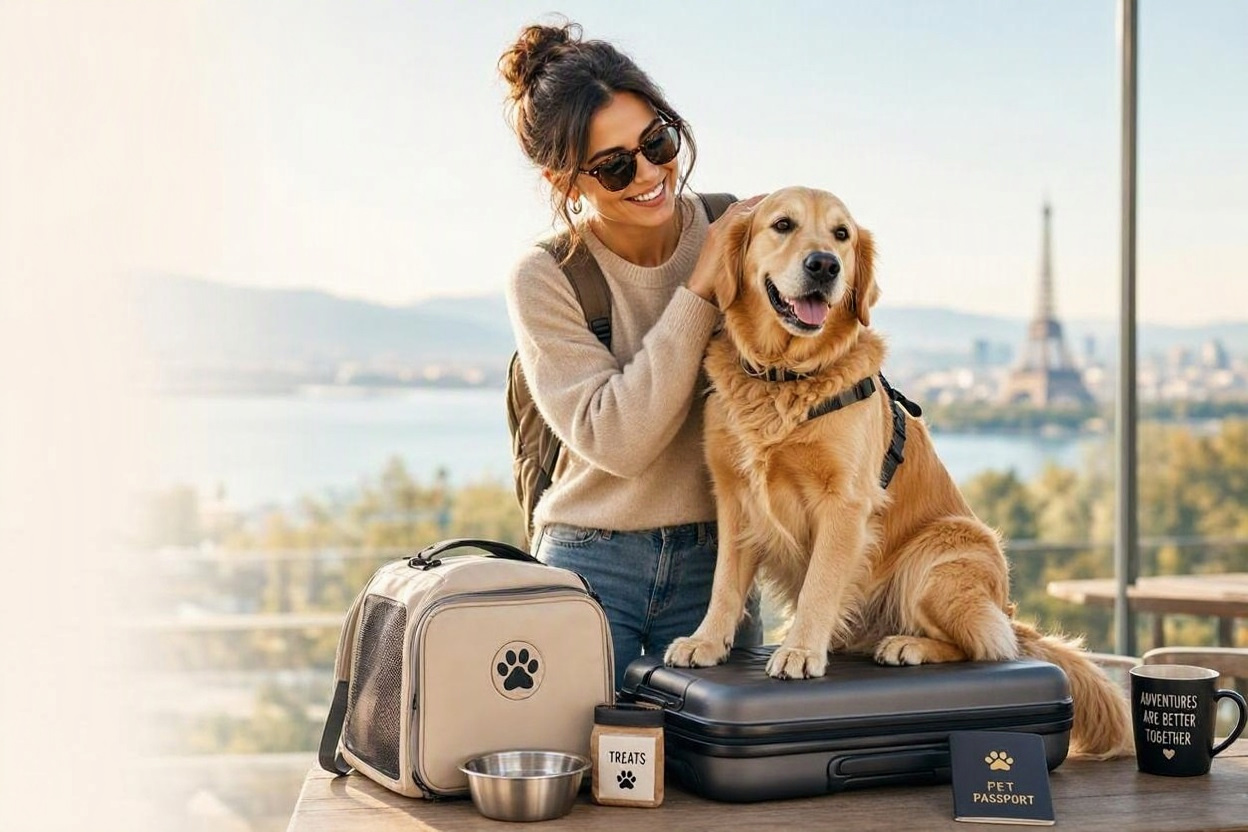
Food and Water
You should bring the pet's usual food for the trip. It is best to avoid experimenting with a new diet right before traveling, as a sudden change in food can cause digestive issues.
The amount of food depends on the length of the journey, but it is wise to bring a small extra supply in case of delays. Water should also be available to the animal, depending on the trip's duration and transport conditions.
Collapsible bowls or special travel water dispensers are convenient options. They take up little space and make feeding and watering mess-free.
Don't Forget Familiar Items
Familiar objects can help your pet feel calmer in an unfamiliar environment. This could be a small toy, a blanket, or another item that carries a familiar scent.
It is especially helpful to bring an item the animal uses for resting at home. A familiar scent can make it easier for the pet to settle in after arriving at a hotel, a rental property, or another new location.
Pet First-Aid Kit
A small travel first-aid kit can come in handy in an emergency. Its contents depend on the type of animal and its individual needs, so it is best to discuss specific medications with a veterinarian beforehand.
In addition to essential supplies, you might want to pack sterile wipes, bandages, gloves, and other basic items. Do not administer human medications to your pet without a professional recommendation.
Hygiene Supplies
If the journey lasts several hours or days, hygiene supplies become particularly important. Cats will need litter and waste bags, while dog owners should bring waste pickup bags, wipes, and a towel.
It is also useful to have a spare bag for soiled items. If your pet gets wet or dirty during a stop, clean clothing or a blanket can help keep the car or other vehicle clean.
Safety During the Trip
Popular articles
Saddle Up! Russia’s Best Horseback Riding Tours Tourist Season 2020: When Does It Open and What Are the Prospects?When traveling by car, the animal should not be allowed to roam freely inside the vehicle. Sudden braking could cause injury to the pet or create a dangerous situation for the driver.
Use appropriate carriers, special restraint systems, or other safety devices suited to the animal's size and the specific vehicle. Ensure the carrier is positioned securely so it cannot slide or tip over.
Never leave your pet alone in a parked car, especially in hot weather. The interior temperature can quickly reach dangerous levels, even if the weather outside seems relatively mild.
Plan Your Stops
When traveling by car, it is best to plan your route with your pet's needs in mind.
A long, non-stop journey can be uncomfortable, especially for dogs.
Plan suitable stops in advance. Your dog may need a walk, and any animal needs the chance to drink water and rest calmly. Safety is crucial when stopping: unfamiliar surroundings and busy roads increase the risk of your pet running off.
Prepare your pet's information
In case of an emergency, it is helpful to have an up-to-date photo of your pet and owner details. You can include contact information on an ID tag or another form of identification.
Make sure this information is current before you travel. If your pet gets lost in an unfamiliar place, having clear contact details can make it much easier to get them back.
.jpg)
Check your accommodation in advance
If your trip involves staying in a hotel, apartment, or other rental, confirm beforehand that pets are allowed. A "pet-friendly" label doesn't always mean there are no additional conditions.
Some properties have restrictions on the size or number of pets, charge extra fees, or have specific rules regarding common areas. It is best to clarify these details before you travel.
What to pack in a separate bag
The most convenient way to stay organized is to pack all your pet's supplies into one separate bag. This way, you won’t have to search for food, water, or documents among your other belongings.
- Documents and veterinary passport.
- Food and a supply of water.
- Bowls or a travel water dispenser.
- Carrier or restraint system.
- Leash and collar (for dogs).
- A toy or a familiar blanket.
- Hygiene supplies.
- Towel and spare waste bags.
- Necessary veterinary supplies.
- A photo of the pet and the owner's contact details.
Final check before departure
It is a good idea to run through this checklist the day before your trip. Make sure your documents are in order, the carrier is in good condition, food is packed, water is ready, and all necessary supplies are in a single bag.
If your pet struggles with travel or has experienced severe stress on previous trips, it is best to discuss preparations with a veterinarian beforehand. You should not administer sedatives on your own before the trip.
Conclusion
Traveling with a pet doesn't have to be difficult. The owner's main task is to plan ahead regarding documents, food, safety, hygiene, and the animal's comfort. Using a dedicated travel bag and a detailed checklist significantly reduces the risk of forgetting anything important.
The better organized the trip, the smoother it goes for everyone involved. Proper preparation allows the owner to focus on the journey, while the pet can handle the trip more comfortably and settle into the new location more quickly.