Pink-Sand Resorts: Where to Find Them
The first time you see a photo of a beach with pink sand, your hand instinctively reaches for the comments. Beneath almost every such image, there are people convinced it must have been edited in Photoshop. From a distance, it really does look as though someone deliberately turned up the colour. But these places genuinely exist.
Expectations and reality are just a little different. While the shore can sometimes look bright pink in photos, in real life it is much more subtle. The colour is soft and almost imperceptible in places. Sometimes you notice it straight away; other times, you need to look closely.
The best-known example is in the Bahamas. The small island of Harbour Island became famous for Pink Sands Beach. This is where many of the photographs that later spread across travel websites are taken.
The secret has long been known. Among the usual pale grains of sand are tiny fragments of coral and microscopic marine organisms. They mix naturally, giving the coastline a delicate pinkish hue.
The most fascinating part begins towards evening. As the sun drops lower, the shore gradually takes on a completely different appearance. You may not notice it at all in the morning, but an hour before sunset the scene changes before your eyes.
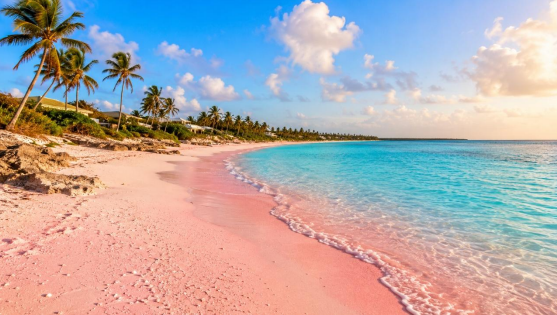
Harbour Island itself is equally charming. There is no sense that every spare metre has long been claimed by hotels, noisy bars and souvenir shops. Everything feels much calmer: small houses, quiet streets and neat boats moored by the piers.
Sometimes a walk along the ocean is more interesting than any excursion. You simply keep walking, listen to the waves and notice how the same stretch of coast constantly looks slightly different. In one place, there is a warm peachy tint; a few metres farther on, the familiar pale colour takes over again.
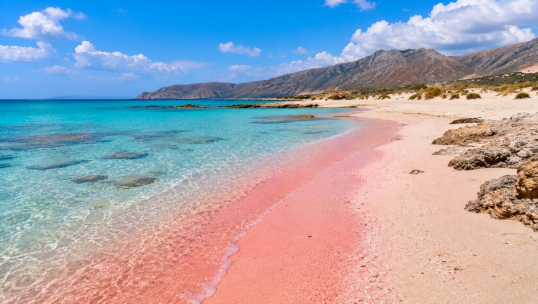
Another well-known spot is on Crete. Elafonissi Beach often appears in lists of Greece’s most beautiful places. Still, many visitors arrive with expectations that are a little too high, largely because of photos in which the sand appears almost entirely pink.
In reality, this is rarely the case. The unusual colour appears in patches, most often near the waterline. That is why some people leave slightly surprised, while others say they liked it even more in person.
What captivates you here is not the brightness of the colour, but the overall atmosphere: shallow water, a crystal-clear sea, a gentle breeze and the feeling that time moves a little more slowly.
A completely different scene awaits on Komodo Island in Indonesia. Getting here is more difficult, so it is usually not crowded with holidaymakers. As a result, the surrounding nature has remained almost untouched.
The pale shoreline meets turquoise water, green hills rise all around, and rocky cliffs stand out clearly in the distance. Climb to a higher viewpoint and the entire bay opens up before you. This is where the photographs often featured in guidebooks and travel round-ups are taken.
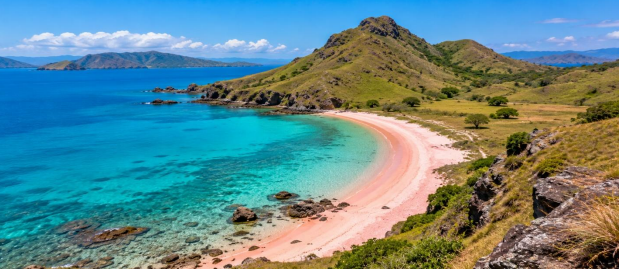
A similar coastline can be found on Great Santa Cruz Island in the Philippines. This destination is far less well known, although it is well worth visiting. Many people come for only an hour or two, take a few photos and then move on.
That is probably not the best approach. It is far more rewarding to stay a little longer. The light gradually changes, the sea becomes calmer, and the familiar landscape begins to look completely different. Small details like these create an entirely different impression.
In general, pink beaches are rarely memorable because of their colour alone. After a while, you stop searching for that shade on purpose. Instead, you begin to notice other things: gentle waves, fresh air, the calm all around, small boats by the shore and the absence of loud music.
These are the details that later become memories. Perhaps that is why people return home not thinking about the unusual sand, but with the feeling that they have seen one of those places unlike any familiar seaside resort.
Beautiful photographs eventually get lost among hundreds of others, but the feeling left by a trip like this somehow stays with you much longer.