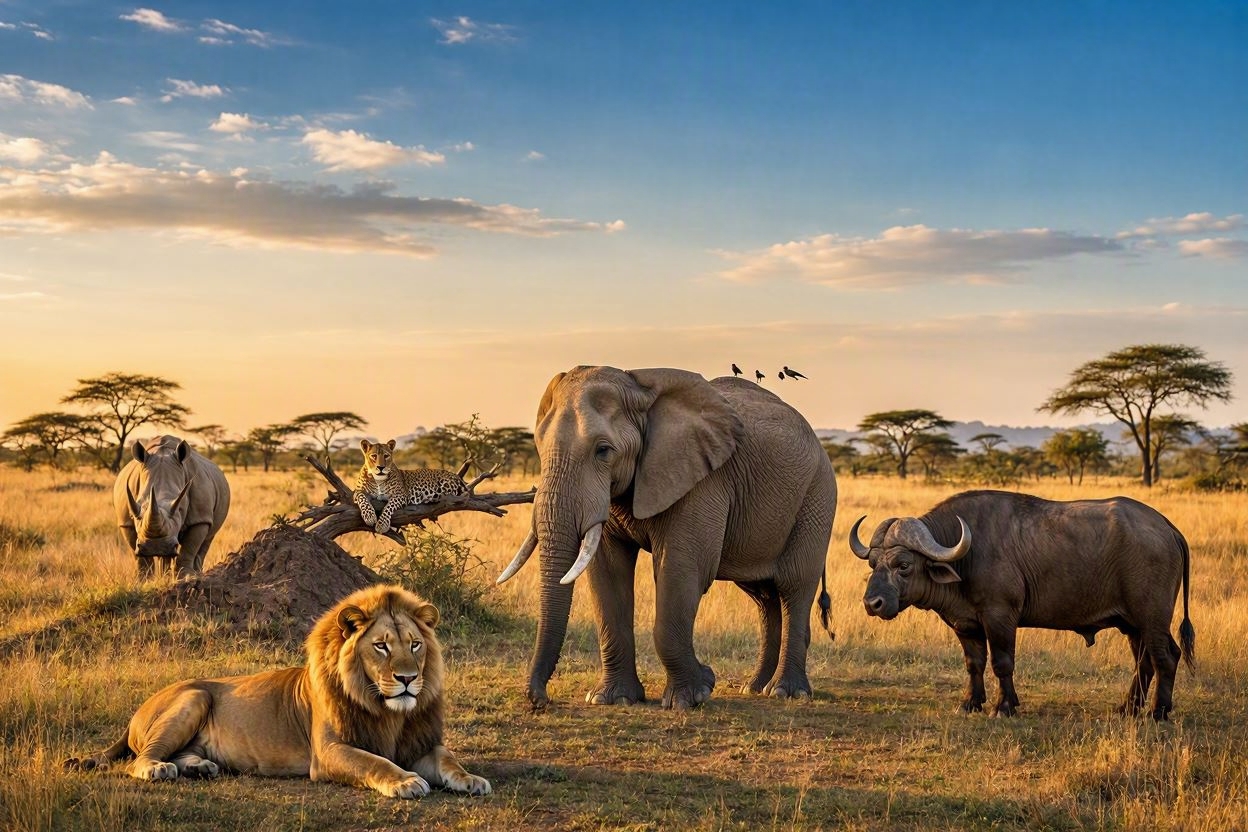
An African safari is more than just a drive across the savanna in an open-top jeep. It is a rare opportunity to witness wildlife free from artificial backdrops, cages, or staged scenarios. For many travelers, the ultimate dream is encountering the "Big Five": the lion, leopard, elephant, rhinoceros, and African buffalo. Originally, hunters coined this term to describe the animals that were the most challenging and dangerous to track. Today, the Big Five have become symbols of wildlife photography, responsible tourism, and the conservation of natural ecosystems.
Who makes up the Big Five?
Each animal in this famous group requires a unique approach to observation. Some are easily spotted at watering holes, while others appear only at dawn or after sunset. A safari's success depends on the season, the guide's expertise, the chosen national park, and a good deal of patience. It is important to remember that nature does not run on a schedule—and that is precisely what makes every encounter so truly special.
The Lion – King of the Savanna
Lions typically live in prides and prefer to rest in the shade during the heat of the day. The best times to spot them are early morning, as the predators return from the hunt, or in the evening, when they become more active. Your chances of seeing lions are particularly high in the Serengeti, Maasai Mara, Kruger, and South Luangwa parks.
The Leopard – The Most Elusive Predator
The leopard is considered the ultimate prize for a photo safari. Masters of camouflage, they hunt at twilight and often rest high up in tree branches. An experienced ranger will look for tracks and listen for the alarm calls of antelopes and birds to locate them.
The best places to spot leopards are the Sabi Sand Game Reserve, the Okavango Delta, and South Luangwa National Park.
Elephant, Rhino, and Buffalo
The African elephant is impressive for its size, intelligence, and complex social behavior. Herds can be seen near rivers and watering holes, especially during the dry season. Rhinos are rarer due to poaching, so it is best to visit protected areas to find them. Buffaloes may look calm, but they are considered among the most unpredictable animals of the savanna, especially if separated from the herd.
Best Countries for Safaris
Africa is vast, and the safari experience varies significantly from country to country. In some places, the main draw is the wildebeest migration; in others, it is secluded lodges, walking safaris, or night drives.
- Kenya – a classic choice for a first safari; famous for the Maasai Mara and a high probability of spotting lions and leopards.
- Tanzania – home to the Serengeti, the Ngorongoro Crater, and the massive Great Migration.
- South Africa – convenient logistics, Kruger National Park, private reserves, and a wide range of accommodation options.
- Botswana – the Okavango Delta, boat safaris, low tourist density, and premium service.
- Namibia – desert landscapes, Etosha National Park, and elephants and rhinos adapted to the arid environment.
When to go on safari
The best time to visit depends on the region, but in many countries, the peak season falls during the dry months. During this time, the grass is shorter, animals congregate more frequently around waterholes, and roads are easier to navigate. In East Africa, the period from July to October is popular, coinciding with the migration in the Maasai Mara and Serengeti. In Southern Africa, the months from May to September offer comfortable conditions. The "green season" following the rains is also appealing: there are fewer tourists, the light is soft for photography, and animal babies are born—though wildlife can be harder to spot amidst the lush vegetation.
What a safari is like
A typical day begins before dawn. Guests have coffee, board an off-road vehicle, and set out for the morning drive. The air is cool at this time, and the animals are at their most active. After a late breakfast, there is a break, followed by an evening safari. Private reserves sometimes allow night drives with spotlights, offering a chance to spot hyenas, genets, owls, and predators on the hunt.
- Morning drive – the best opportunity to witness hunting and signs of nocturnal activity.
- Midday rest – time to recharge, make notes, and review photos.
- Evening safari – soft light, increased predator activity, and beautiful sunsets.
- Night viewing – not available everywhere, but reveals a different side of the savanna.
Safety and Conduct
A safari is safe provided you follow the guide's instructions. The main mistake tourists make is viewing the animals as familiar characters from nature documentaries.
Even a calm elephant or a resting lion remains a wild animal and can change its behavior in an instant.
- Do not leave the vehicle without the guide's permission.
- Do not feed the animals or litter.
- Speak quietly, avoid sudden movements, and do not use camera flashes.
- Keep your hands and equipment inside the vehicle, especially when near predators.
- Choose neutral-colored clothing: khaki, beige, olive, or gray.
Wildlife Photography and Responsible Safaris
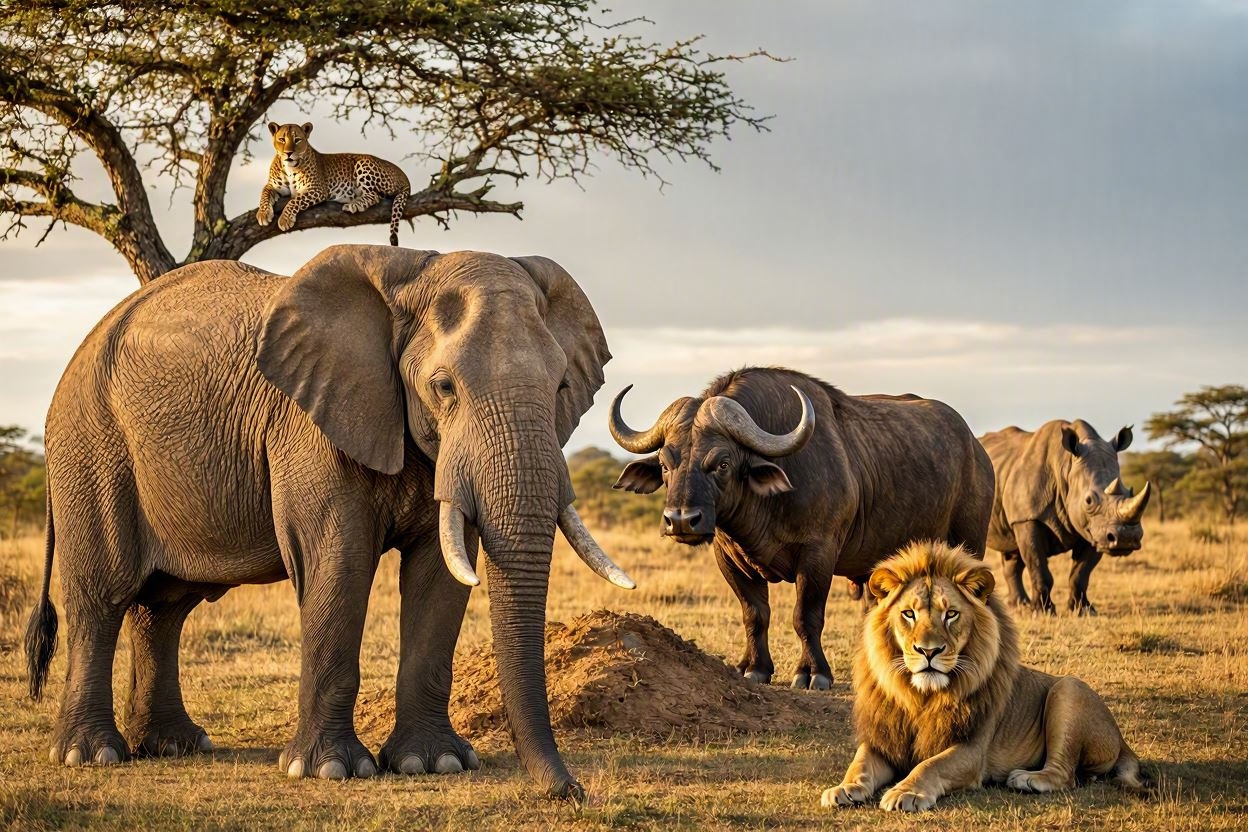
A good photograph should never come at the expense of an animal's well-being. Ethical guides do not chase animals, block their path, or approach young animals too closely. Useful gear includes a 300mm+ lens, spare batteries, a memory card, and dust protection. However, sometimes the best choice is to put the camera aside and simply observe: a lioness calling to her pride, elephants communicating through trunk contact, or a leopard vanishing into the shade of a tree.
Safari Costs and Preparation
The cost depends on the country, the season, the lodge's standard, and the type of trip. A budget group safari in Kenya or Tanzania is usually cheaper than a private tour in Botswana or a private reserve in South Africa. The price often includes accommodation, meals, game drives, guide services, and park fees. You should also budget separately for flights, visas, insurance, tips, and vaccinations. Before your trip, check malaria guidelines, arrange medical insurance, and verify baggage restrictions for domestic flights.
Encountering the Big Five is a privilege, not a guarantee. It is precisely this unpredictability that makes an African safari such a powerful experience. Here, you learn to observe more closely, listen to the silence, and realize that true luxury is not a room in a lodge, but a sunrise over the savanna and lion tracks on a sandy road.