The tropics draw travellers not only with their greenery, but with the feeling of entering a living labyrinth. The Amazon, Borneo and the Congo are three distinct worlds: in one, waterways dominate; in another, karst caves and mountain trails; and in the third, rainforests with rushing rivers and rare species. This article explores how these jungles differ, which routes offer the richest experiences, and how to approach the journey responsibly.
Three Jungles, Three Natural Characters
To make an adventure truly memorable, it helps to understand how each landscape works. Equatorial forests may share an overall sense of density, but their rivers, terrain and seasonal patterns are all different.
The Amazon: a Forest That Breathes with the River
The Amazon is first and foremost a water system. Here, the forest often reveals itself from the water: channels, lagoons, seasonal flooding and banks with mangrove areas. The experience is heightened by its soundscape: birds, insects and the roar of waterfalls or rapids create a sense of vastness even where the view is limited by foliage.
Borneo: a Mosaic of Forests, Caves and Mountains
Borneo is one of the most biologically rich islands on the planet. Alongside lowland forests, it has mountainous areas where trails become steeper and humidity is distributed differently. Many routes combine jungle trekking with striking natural sights: waterfalls, viewpoints and cave systems. In Borneo, you often feel the tropics are vertical: as you rise from sea level, the forest composition and the wildlife you encounter change with the terrain.
The Congo: Scale and the Power of the Ecosystem
The Congo is associated with dense, shaded forests and great rivers. Navigation here works differently: trails may disappear beneath vegetation, while travel by water can be more efficient than hiking. The Congo suits travellers interested in vast ecosystems and routes where guides play a central role, from choosing the safest time to set out to locating animal habitats.
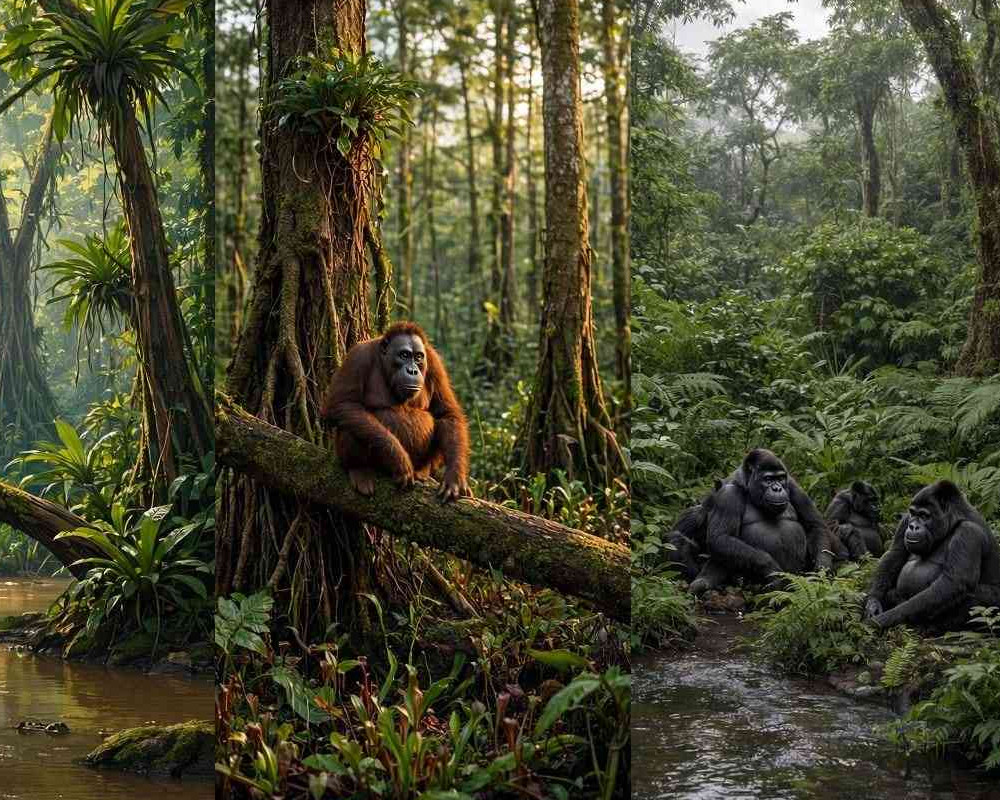
What You Can See in the Tropics — Without Romanticising It
The tropics do not guarantee encounters with rare species, but with careful preparation, they offer a chance to see them in their natural habitat. It is best to approach the experience as observation rather than expectation.
- Rainforest birds, from brightly coloured species to those best identified by their calls.
- Insects and nocturnal activity: light traps can offer rare sightings, but only when used responsibly.
- Reptiles and amphibians, most often found near water and along damp stretches of trail.
- Primates and signs of their presence: sometimes indirect evidence matters most, such as feeding sites, calls and paths through lianas.
- Clever plants: lianas, epiphytes and species adapted to pockets of light in the forest.
When Your Chances Are Best
The best time depends on the region and the season. In the tropics, rain does not cancel a trip, but it does change the conditions: trails become slippery, some areas flood, and animal activity may shift. The best approach is to check seasonal conditions with your tour operator in advance and allow extra days if weather affects transport.
Routes and Adventure Styles
A jungle journey can be built around several different formats. The most rewarding approach is often to alternate between water travel, hiking and short excursions to notable sights.
Popular articles
Saddle Up! Russia’s Best Horseback Riding Tours Vottovaara: Karelia’s Place of PowerAmazon Classic: River, Channels and Night Wildlife Watching
A typical route begins on the river, followed by stretches through smaller channels and short daytime trails. In the evening, guided night outings or walks are often arranged to observe animal activity after sunset. Keep in mind that the night portion of the journey requires discipline: use torches carefully so as not to disturb wildlife or dazzle other members of the group.
Active Borneo: Trails with Vertical Highlights
In Borneo, popular routes include climbs to waterfalls or viewpoints during the day, followed by a return through forest trails. Cave excursions, where available, add a dramatic contrast: temperature and humidity change, sounds become different, and the route often requires torches and adherence to safety rules set by local instructors.
The Congo: Logistics, Water and Working with a Guide
Journeys in the Congo are more often built around major logistical stages, including river transfers and travel between base camps. Hiking sections on these routes are usually shorter but richer in wildlife observations. A good guide does more than simply lead the way: they read the environment, using tracks and timing to select places for wildlife encounters while reducing risks for the group.
How to Prepare: Practical Advice
The tropics can test your resilience, but with the right approach they become a safe and comfortable adventure.
Gear You Really Need
- Waterproof, breathable clothing and comfortable footwear with grippy soles.
- Insect protection and a basic first-aid kit approved by your doctor.
- A waterproof case for documents and a backup power bank.
- A torch with a low-light setting for night outings.
Safety and Responsible Conduct
The most important rule is to follow the instructions of local guides. In the jungle, risks are often linked not to “monsters” but to small details: slippery ground, sudden tropical storms, hidden holes, thorny plants and losing your bearings in poor visibility. Stay on the route, keep your distance from animals and do not feed them: it affects the ecosystem and can be dangerous.
Choosing a Region: What Is Right for You
If you are drawn to waterside landscapes and the feeling of a “forest ocean,” choose the Amazon. Borneo is ideal for those seeking varied terrain and a strong focus on active exploration. The Congo is a sensible choice if you value vast ecosystems, professional guiding and routes where nature feels especially immense.
Whichever region you choose, the key to a successful trip is the same: plan not only what you want to see, but how you will travel through it. Then the jungles of the Amazon, Borneo and the Congo will reveal themselves not as a collection of random snapshots, but as a complete tropical travel story.