For many travelers, food has long ceased to be merely a necessary part of a trip. National cuisine offers as much insight into a country’s history, traditions, and way of life as museums and architectural landmarks do. That is precisely why culinary tourism has emerged as a distinct form of travel.
Such trips may include visits to restaurants, street markets, farms, wineries, cheese producers, and cooking workshops. Sometimes, the primary goal of the journey is a specific dish or product—something a tourist is willing to cross multiple borders to experience.
Italy: A Journey Through Regions and Flavors
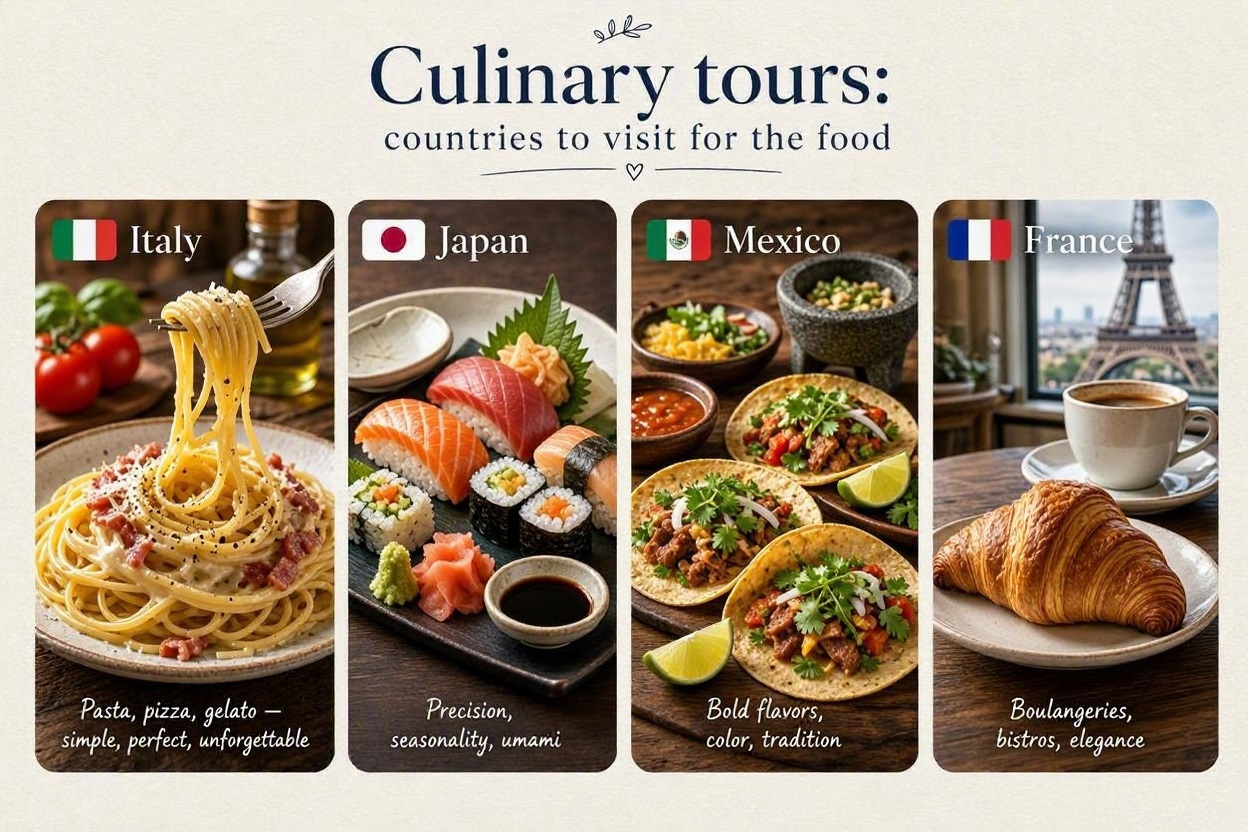
Italy is one of the most obvious choices for a culinary trip. Yet, Italian cuisine varies significantly from region to region. Pasta, pizza, cheeses, seafood, meat dishes, and desserts all come in a multitude of local varieties.
In Naples, tourists discover traditional pizza; in Bologna, they explore pasta and meat dishes; and in Tuscany, they can sample regional produce and local wines. Italian markets also deserve special attention, offering a chance to see seasonal ingredients and experience the everyday cuisine of the locals.
Japan: From Sushi to Street Food
Japanese cuisine draws travelers with its blend of tradition, aesthetics, and an immense variety of ingredients. Sushi is just one facet of the country's culinary culture.
In various cities, travelers can sample ramen, tempura, yakitori, okonomiyaki, udon, and a host of regional specialties. Local markets and small family-run establishments are particularly interesting, as the food is often prepared using recipes passed down through generations.
Tokyo offers a vast array of restaurants across all price points, while trips to other regions allow you to discover lesser-known dishes.
France: Cuisine as Part of the Culture
French cuisine is world-renowned, but the best way to experience it is firsthand in France. Here, the culinary journey can range from simple local produce to sophisticated restaurant dishes.
While Paris draws visitors with its cafés, patisseries, and restaurants, the country's regions can offer a true revelation for the culinary traveler. Cheeses, bread, pastries, meat dishes, seafood, and wines vary according to local traditions.
Thailand: Vibrant Flavors and Street Food
Thailand is particularly fascinating because magnificent food can be found not only in restaurants but also right on the street. Night markets and small street stalls offer an incredible variety of dishes.
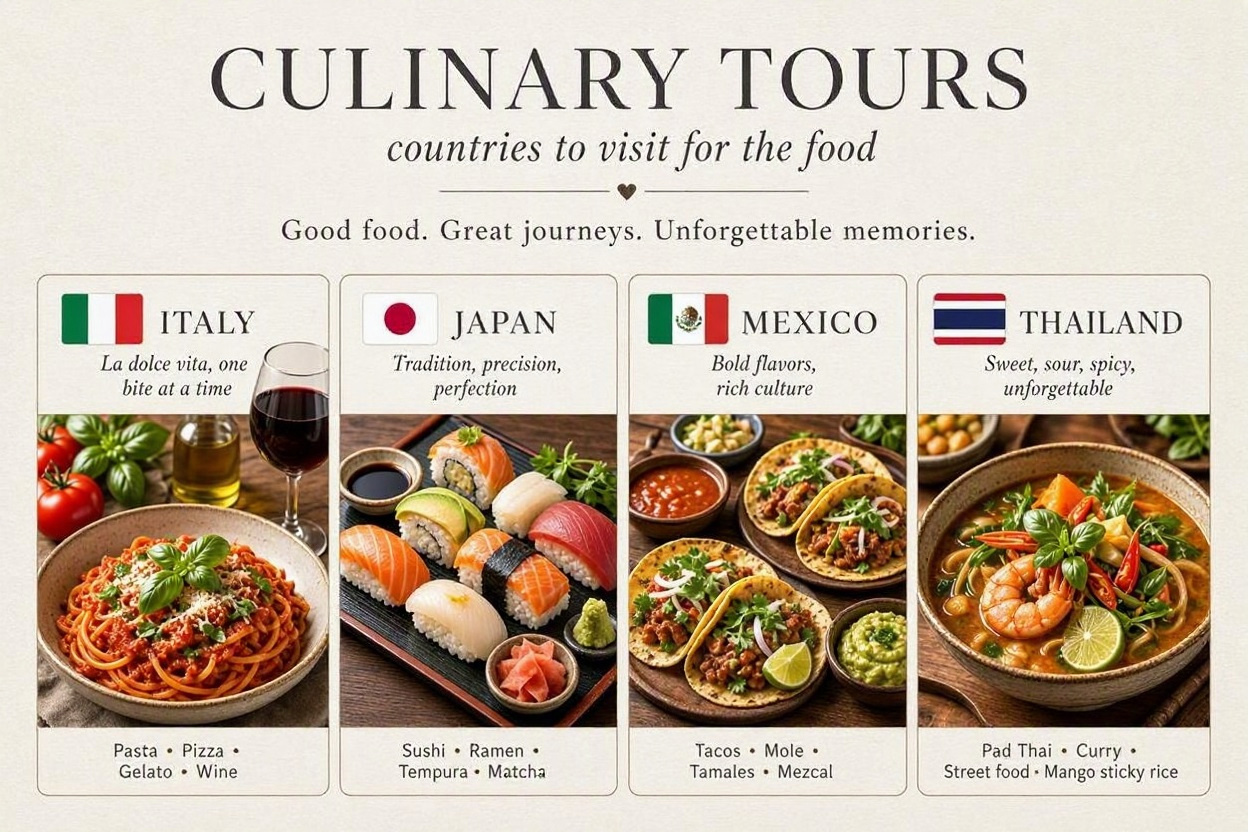
Pad Thai, Tom Yum, green curry, and rice and seafood dishes introduce you to the country's signature blend of sweet, sour, salty, and spicy flavors.
For a true culinary adventure, it is worth venturing beyond the tourist districts. Small local markets often provide the chance to taste dishes rarely found on international menus.
Mexico: More Than Just Tacos
Mexican cuisine is characterized by immense regional diversity. While tacos have become an international symbol of the country, the local gastronomy encompasses much more.
Travelers can sample tamales, enchiladas, mole, various soups, and dishes featuring corn, meat, and seafood. Local spices, chili peppers, and traditional cooking methods play a significant role.
Popular articles
Japan’s Lesser-Known and Fascinating Islands Saddle Up! Russia’s Best Horseback Riding ToursMarkets are a vital part of Mexico's culinary culture. Here, visitors can not only enjoy a meal but also discover a vast array of fruits, vegetables, spices, and other products.
Georgia: Cuisine and Hospitality
Georgia has become a popular destination for culinary travel thanks to its rich cuisine and tradition of festive feasts. Khachapuri, khinkali, lobio, meat dishes, sauces, and cheeses are just a few highlights of the local menu.
Georgian wines and their production traditions are of particular interest. A trip to the wine-growing regions allows travelers to combine tastings with an exploration of local culture and the history of winemaking.
Spain: Tapas, Markets, and Regional Cuisine
Spain is an ideal destination for a food-focused trip. Different regions boast their own unique culinary traditions, while the tapas format allows diners to sample a wide variety of dishes in a single evening.
Cities such as Barcelona, Madrid, and San Sebastián offer restaurants, markets, and small bars, each with its own distinct character.
For lovers of seafood, meat dishes, cheeses, and desserts, creating a diverse culinary itinerary is especially easy.
How to plan a culinary tour
A great culinary tour doesn't have to consist solely of high-end restaurants. Often, the most memorable experiences come from mixing different styles: a local market in the morning, a small family-run café for lunch, a cooking class, and a restaurant dinner in the evening.
- Research regional dishes before your trip.
- Visit local markets and small eateries.
- Try seasonal ingredients.
- Leave time for unexpected culinary discoveries.
- Don't limit yourself to dishes already famous abroad.
Why culinary travel is so memorable
Food creates a special connection to a place. The taste of a specific dish can bring back memories of a city, a market, or a small restaurant years after the trip has ended. That is why culinary tourism allows you not just to see a new country, but to literally experience its culture.
Conclusion
Italy, Japan, France, Thailand, Mexico, Georgia, and Spain are just a few destinations that can turn an ordinary vacation into a true culinary adventure. Unique ingredients, recipes, and traditions await travelers in every country.
The main advantage of this type of travel is that you can build your itinerary around flavors rather than famous landmarks. Sometimes, it is a small café, a local market, or a dish prepared using an age-old recipe that becomes the highlight of the trip.