Mountain trekking is more than beautiful peaks and scenic trails. It is a way to learn how to move through changing weather, manage your effort, and enjoy the journey rather than just the destination. To make your hike an adventure rather than a stressful experience, choose a route that matches your fitness level and assess the conditions properly: altitude, elevation gain, daily hiking time, and water availability.
How to choose a trek for your fitness level
Even routes of the same length can feel completely different. One may follow valleys and forest paths, while another crosses rocky ridges with wind and steep climbs. Focus on four factors:
- Daily elevation gain - the greater the total ascent, the more demanding the pace and recovery.
- Technical difficulty - scree slopes, rocky sections, and unmarked trails.
- Altitude - the higher the starting point and the faster the ascent, the more noticeable the effects on how you feel.
- Route logistics - how much time is spent on the trail, in transfers, and whether it is possible to leave the route if the weather changes.
Assess your “readiness level” honestly
If you can confidently hike for 3-4 hours over uneven terrain without significant fatigue, beginner-level routes should suit you. If you train regularly and can handle long climbs without falling apart, you can move into the intermediate range. Experienced trekkers can consider routes with high passes and longer daily stages.
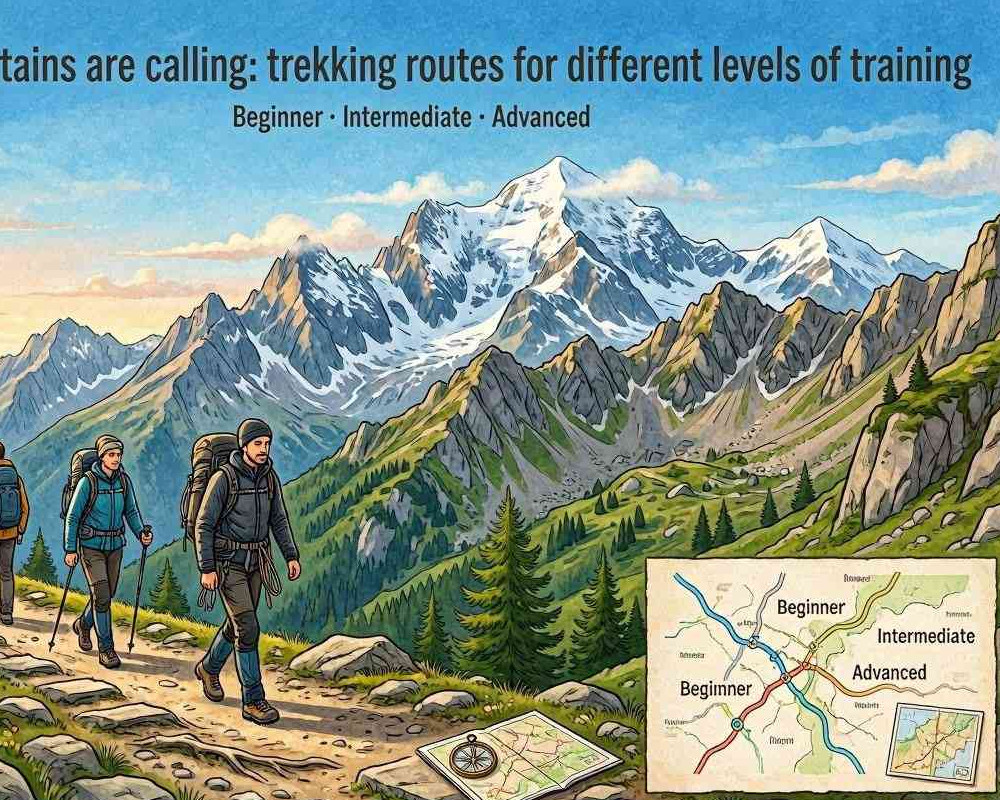
Routes for beginners: minimum stress, maximum impressions
Beginners benefit from clear trails, manageable distances, and the ability to change plans easily if the weather turns. It is best to choose routes with infrastructure: trails that lead to villages, water refill points, and easy-to-recognize landmarks.
Short trails with views and gentle terrain
- A route around a lake and nearby viewpoints - often with elevation changes that can easily be spread over several hours.
- A trail to waterfalls or lookout points - usually well marked and suitable for a first trekking experience.
- A circular valley route - lets you return without long transfers and reduces the risk of losing time.
The secret to beginner comfort is taking regular breaks and keeping your breathing under control. If you start gasping - if your rhythm breaks down and tension rises - slow your pace and take a pause.
Routes for intermediate hikers: confidence, with a margin to spare
At the intermediate level, elevation gain usually increases, hiking days become longer, and your legs need to be better prepared. The “I’ll just sprint through it” approach no longer works. You need a steady walking pace, the ability to plan your water supply, and control over your body temperature.
Pass trails and longer day hikes
Look for routes where:
- You cover 10-18 km a day, depending on the terrain.
- The elevation gain is noticeable but does not force you to hike at your limit.
- Overnight stops are available with minimal logistical risk.
In practice, these are often trails from a valley to a pass and back, or linear routes with straightforward access to transport. In terms of how they feel, intermediate trekking means “manageable fatigue.” You should arrive at camp or in a village still wanting to continue the next day.
Routes for experienced hikers: high routes, demanding conditions, thoughtful tactics
Experienced trekkers choose routes where discipline matters as much as strong legs. These routes more often include long pass sections, rocky trails, weather windows, and stricter navigation requirements.
When to go farther - and how not to make things harder than necessary
- Only if you have completed days with similar demands, even in another region.
- If you can adjust your plans for wind, rain, and poor visibility.
- If you understand your equipment and have basic first-aid training.
On difficult routes, the key skill is judging your pace at altitude. Your body works differently, and having extra time matters more than “heroics.” It is better to reach a point early and wait calmly for conditions to improve than to push through fog at your limit.
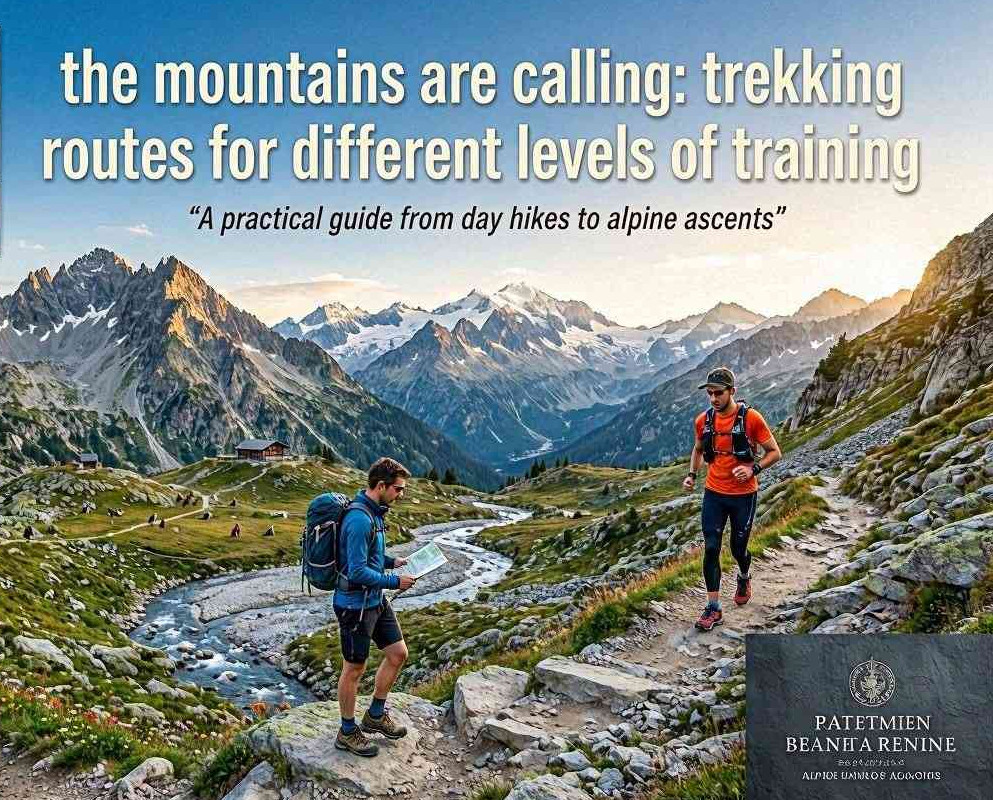
Equipment and routine: universal rules for every level
Whatever the difficulty, trekking benefits from a thoughtful approach. You do not need to chase the “most expensive” gear. You need reliability where it truly affects comfort and safety.
Essentials that are almost always worth having
- Footwear with the right sole and a proven fit - blisters cannot be fixed “on the trail.”
- Layered clothing - a breathable base layer, insulation, and wind protection.
- A water system - bottles or a hydration bladder, plus extra water for sections without sources.
- Navigation - an offline map and the ability to use it, even if the route seems “obvious.”
Pace and daily planning
Start more slowly than you think you need to. In the mountains, muscles take longer to warm up, and an “overly energetic” start leads to an early drop in energy. Set a walking-and-resting routine, and do not wait for fatigue to catch up with you. If the route crosses a pass, decide in advance how much time you are willing to spend on that section if the weather changes.
In summary: choose a route through careful planning, not ambition
Trekking routes for different fitness levels do not exist “for rankings”; they exist so that you gain the right experience and return happy. Start with something clear and safe, build your skills at the intermediate level, and only then move on to demanding combinations of routes. The mountains really do call - and if you find your own pace, that call will bring joy every day.