A long-haul flight can easily become a series of discomforts: limited space, dry air, a disrupted routine, and worries about being late or not getting enough sleep. But stress is not inevitable—you can reduce it before boarding and manage it during the flight with a few thoughtful steps. Below is a practical strategy that helps most travelers feel calmer and more refreshed.
Before departure: set yourself up for comfort
The main goal of preparation is to remove uncertainty. The fewer unknowns there are, the less anxiety you are likely to feel. Start with a plan for your departure day and habits you will not have to improvise at the last minute.
Turn your worries into a checklist and address them with actions
- Check your route and departure time twice: in the morning and again 4–6 hours before leaving.
- Prepare your documents in advance: keep them all in one place so you do not have to search for them in a rush.
- Check in quickly—online, if possible—and choose a window or aisle seat based on what feels most comfortable for you.
- Plan your connectivity: charger, access to messaging apps, and offline maps.
Bring items that genuinely improve your comfort
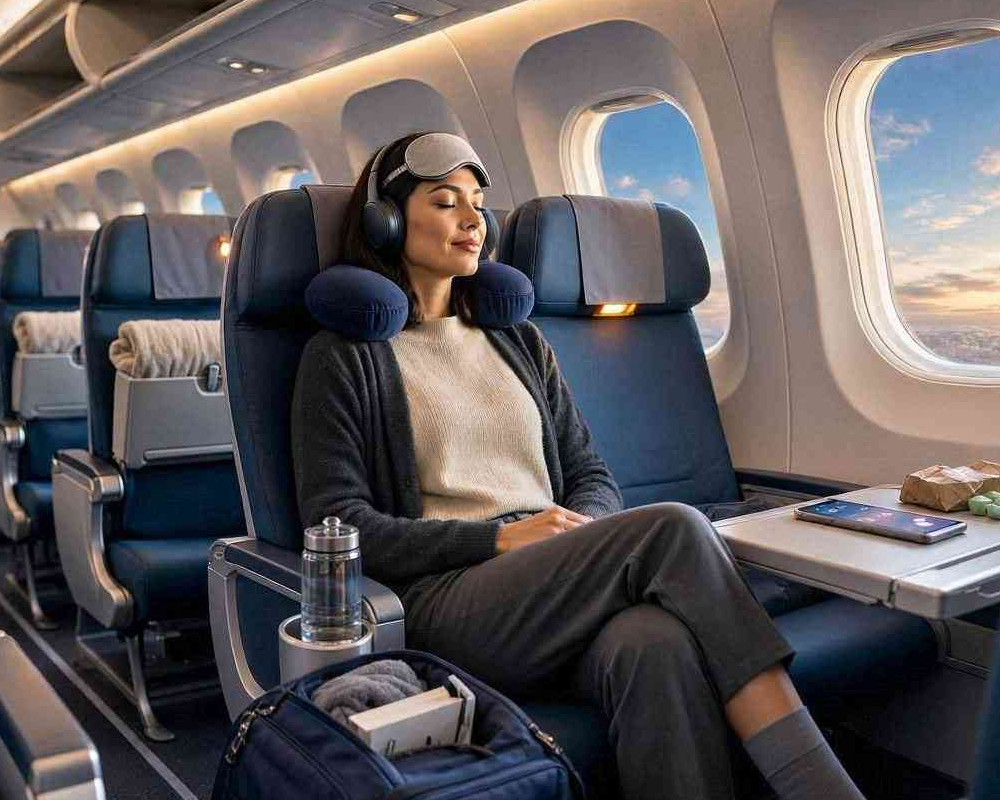
Comfort on a plane comes down to small details. Your belongings do not need to be bulky—they simply need to support your body.
- Earplugs or noise-cancelling headphones to reduce sound overload.
- A soft blanket or an extra layer of clothing—the cabin temperature can vary.
- A moisturizing spray or cream for your skin, plus lip balm.
- Comfortable shoes and socks, which can make a noticeable difference to leg fatigue.
- An empty bottle or extra water, in accordance with airline rules.
Food and water: how to avoid feeling worse
Stress increases when your body feels uncomfortable because of what you eat or drink. During a flight, the key is not so much to “eat perfectly” as to eat regularly and predictably.
Choose light meals 6–8 hours before departure
If you eat a heavy meal shortly before boarding, you may feel sluggish or nauseous. Aim for simple foods: protein without too much fat, vegetables, and moderate portions. It is best to avoid alcohol, as it disrupts sleep and contributes to dehydration.
How to eat on the plane
- Drink water in small amounts throughout the flight.
- Limit caffeine: if you are sensitive to stimulants, replace some drinks with water or mild tea.
- Do not combine too many triggers at once: sweets + alcohol + a late meal can often make you feel worse.
- Light snacks can help you stay balanced: nuts, fruit, crackers, or snacks without too much salt.
Sleep and routine: make the most of every opportunity
Sleep is the main tool against fatigue, but it is not always something you can simply switch on. It helps to adapt to the situation. Even a short rest can change your perception of time and reduce irritability.
If you are crossing time zones
Use the time at your destination as your guide. The more closely you align your routine with local time, the easier it will be to adapt. In practice, this means planning a longer sleep period for the appropriate time at your destination and scheduling activities around periods of wakefulness.
Techniques that can help you fall asleep
- Reduce stimulation: lower your screen brightness and volume.
- Create a mini ritual: follow the same sequence before sleep, such as washing your face, getting into a comfortable position, and using earplugs.
- Use breathing: take slow breaths in and longer breaths out for 4–6 cycles, until you feel more relaxed.
Popular articles
Saddle Up! Russia’s Best Horseback Riding Tours Vottovaara: Karelia’s Place of PowerMovement in the cabin: preventing tension and stiffness
Sitting for long periods can cause muscle tension, swelling, and fatigue. Regular small movements are one of the easiest ways to reduce physical stress and calm your nervous system.
Simple exercises that feel comfortable
- Move your feet: make circular motions and rise onto your toes for 30–60 seconds several times during the flight.
- Stretch your head and shoulders: gently, without sudden movements, for a total of 1–2 minutes at a time.
- Shoulder circles: lower your shoulders, draw your shoulder blades together, then relax.
- Walk along the aisle when it is safe and appropriate: take short walks regularly rather than making infrequent bursts of movement.
How often to take breaks
A general guideline is to change your body position every 60–90 minutes. On a long flight, start with what feels psychologically easy: even one short stretch every hour is already a step toward feeling calmer.
Managing anxiety: how to stay in control
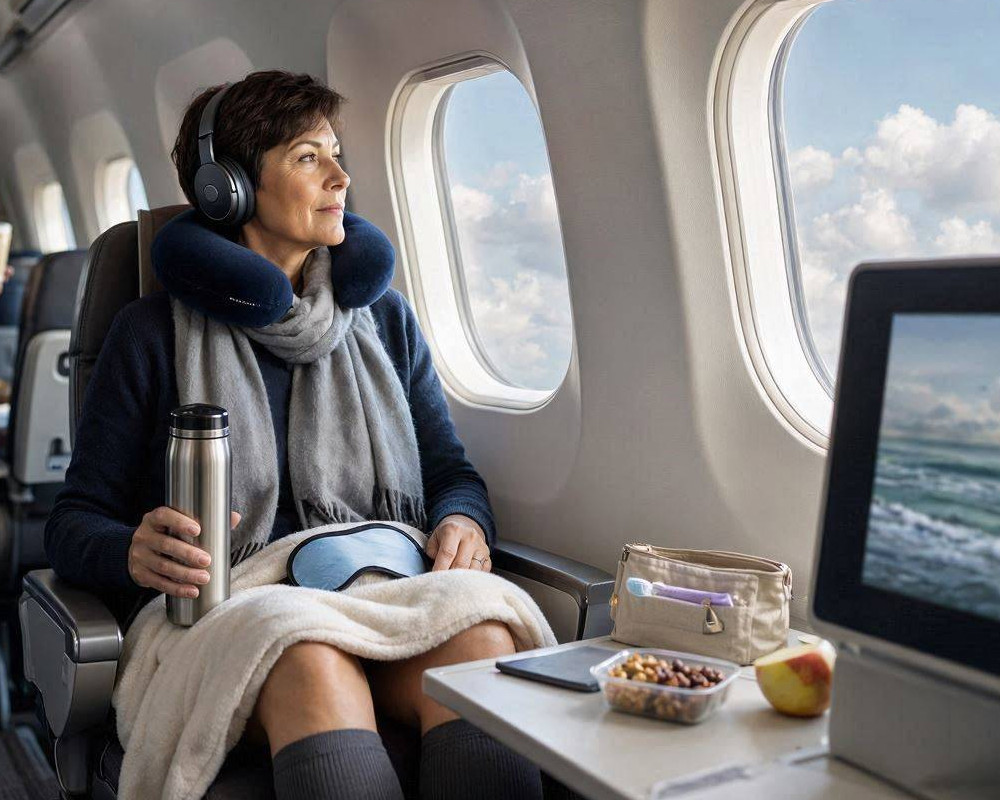
Flight stress is often connected not to the plane itself, but to expectations: “What if I cannot sleep?”, “What if I feel unwell?”, “What if I cannot handle it?” It can help to replace catastrophic thoughts with specific actions.
The “Control – Action – Let Go” practice
- Control: identify what genuinely depends on you—water, sleep, your seatbelt, stretching, and your checklist.
- Action: do one small thing right now—stand up, stretch, change position, or drink water.
- Let go: acknowledge that the rest cannot be controlled, then bring your attention back to the present—your body sensations, breathing, and sounds around you.
Relaxing activities that do not overwhelm you
- Audio content: a podcast or calming music, without endlessly scrolling through the news.
- Unhurried light reading: a book, magazine, or notes.
- Creative tasks: planning your trip, drafting messages, or writing down ideas.
Boarding and leaving the plane: minimizing adjustment stress
How you feel after landing depends on how you handle the first moments after your flight. To reduce that drained feeling, follow this simple approach.
Right after landing
- Stand up and walk for a few minutes to restore circulation.
- Drink water and moisturize your face and lips if needed.
- Check your belongings: make sure you have not left anything in your pockets or at your seat.
The first hours at your destination
If it is daytime, get outside into the light and walk around—a short stroll will help reset your body clock. If it is nighttime, prepare for sleep in advance: dim the lights, limit screen time, and do not plan activities “just in case.”
A long-haul flight stops feeling like an ordeal when it has structure. Preparation removes uncertainty, water and food support your body, sleep and movement reduce fatigue, and managing anxiety restores a sense of control. Follow this approach, and even the longest flight will feel noticeably easier.