Sunrise and sunset can transform even a familiar landscape. Soft side light accentuates the terrain, water reflects the sky, and city skylines become more striking. But the effect depends on more than the weather. Choose an open viewpoint with the right direction, check the route in advance, and arrive before the light show begins. Below are places where mornings and evenings are especially scenic, along with practical advice for travellers and photographers.
Best Places to Watch the Sunrise
Mountain Peaks and Passes
In the mountains, the first rays appear above the horizon and gradually illuminate the slopes. The Bermamyt Plateau is one of the best-known viewpoints in the North Caucasus. It offers a panoramic view of Mount Elbrus, while high humidity can fill the valleys with clouds. You will need a vehicle suitable for unpaved roads or an organised tour. The weather changes quickly, so warm clothing is essential even in summer.
In Altai, sunrise is easy to watch from accessible viewpoints along the Chuysky Trakt. The morning light is particularly striking around the North Chuysky Range. Use official lay-bys and do not leave your car on the roadway.
The Sea of Japan Coast
In Vladivostok and its surroundings, the sun rises over the sea. Suitable viewpoints can be found on Russky Island, Cape Tobizin, and equipped viewing areas facing east. Rocks can be slippery after rain, and strong gusts are possible near the water. It is safer to stay on marked trails and avoid approaching cliff edges for a photograph.
Lakes and Calm Rivers
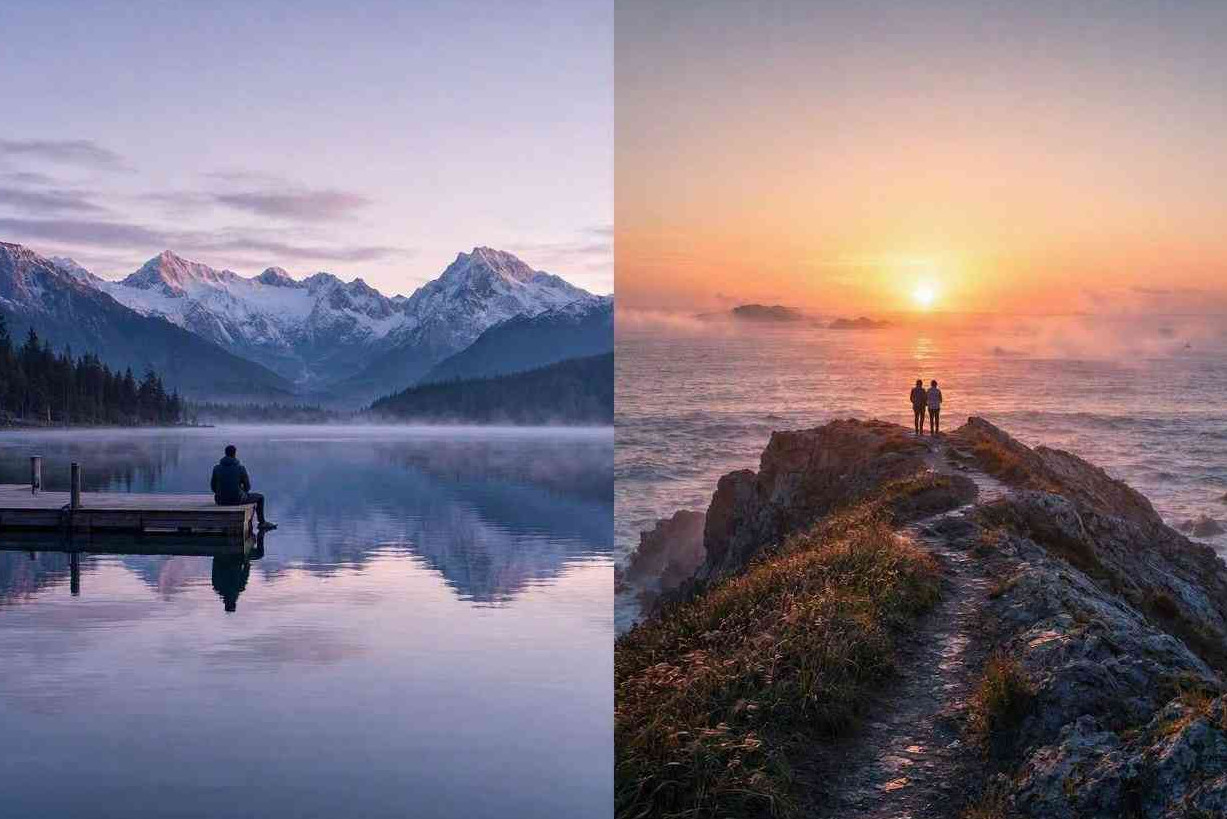
At sunrise, the wind is often lighter, turning the water's surface into a mirror. Beautiful reflections can be seen on Lake Ladoga, Lake Seliger, Lake Baikal, and the small lakes of Karelia. The bays of Baikal's Maloye More are especially interesting: clear air makes the shoreline sharply defined, while the sky shifts from cool blue to gold. The best shot usually comes 20–30 minutes before the sun appears.
Best Places to Watch the Sunset
Sea Beaches and High Cliffs
A west-facing coast with an open horizon is ideal for sunset. On the Curonian Spit, the sun sets over the Baltic Sea, colouring the dunes and clouds. Visit the dunes only via boardwalks and permitted routes, as the sandy surface is easily damaged. Fine evening views can also be found along the Kaliningrad Region coast in Svetlogorsk and Yantarny.
Sunsets on the White Sea are particularly long in early summer. Rocky shores, islands, and low tide create a dramatic foreground. Before setting out, check the tide schedule, as the water can cut off the return route along some stretches of coast.
Urban Panoramas
In cities, choose official viewpoints, embankments, and high hills. In Moscow, Sparrow Hills offers a wide view to the west. In St Petersburg, beautiful evening light can be seen from Palace Embankment and Universitetskaya Embankment, where the sky is reflected in the Neva. In Kazan, the Kremlin Embankment offers a striking panorama combining water, historic architecture, and illumination.
Do not climb onto closed rooftops on your own. A legal viewing platform is safer, and a great result depends on the direction of light and composition rather than extreme height.
How to Choose a Viewpoint and Time
Before your trip, study the terrain map and the sun's position. For sunrise, you need an unobstructed view east; for sunset, west. Mountains, buildings, or forests may hide the sun earlier than expected. The cloud forecast matters too: a completely clear sky often looks less interesting than layered clouds lit from below.
- Arrive 30–40 minutes before sunrise or sunset.
- Check road access, parking, and your return route.
- Bring a torch, a charged phone, water, and an extra layer of clothing.
- Use a tripod only where it will not obstruct other visitors.
- Do not cross barriers or leave litter behind.
Which Landscape to Choose
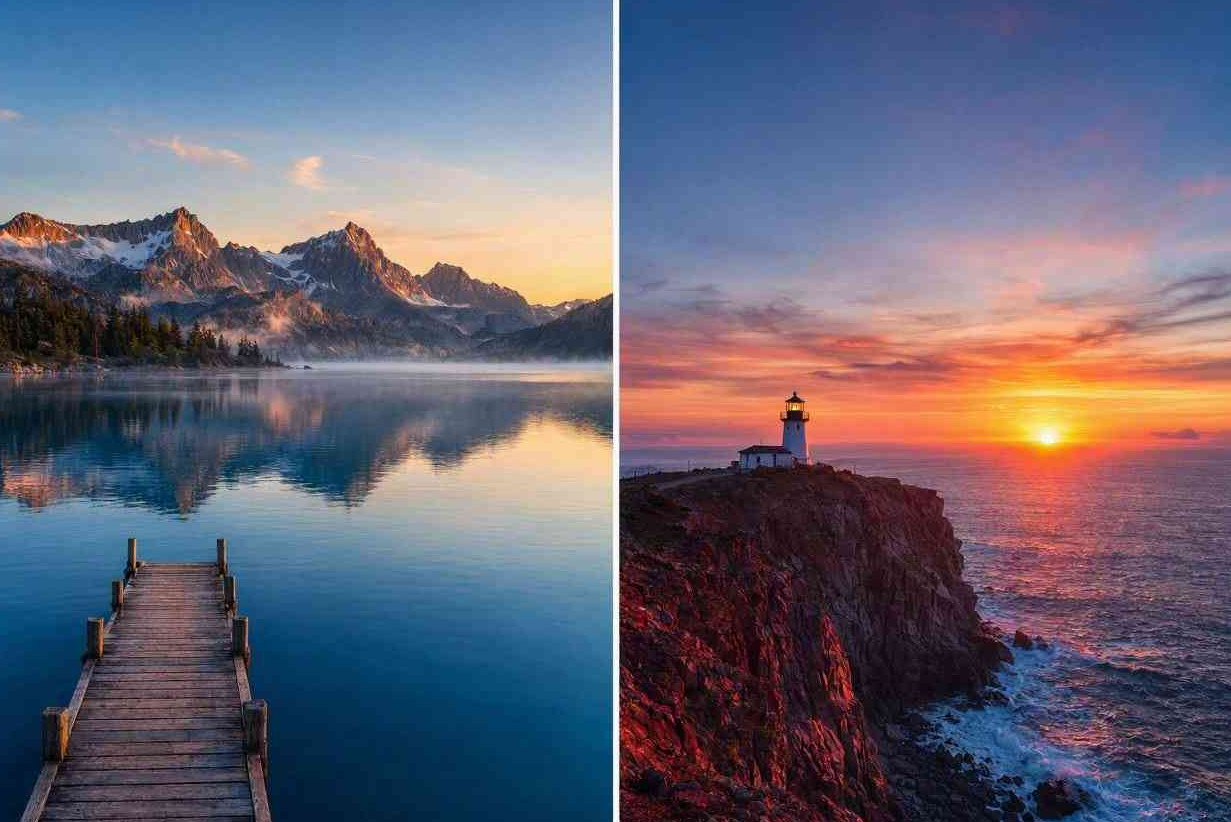
Mountains suit those who appreciate scale, mist, and layered silhouettes. The coast offers a clean horizon and vivid reflections. Lakes are best for a calm atmosphere and symmetrical images. Urban viewpoints are convenient thanks to easy access, transport links, and the chance to combine natural light with architecture.
The best place is not necessarily the most famous one. Sometimes it is enough to find a safe shore, hill, or embankment near home. If you determine the sun's direction in advance, assess the weather, and plan your composition, watching a sunrise or sunset can become a complete journey without travelling far.