Why Caves Hold Such Fascination for People
Caves have always held a special place in the human imagination. They are spaces where nature creates its own architecture without human intervention, forming intricate networks of tunnels, chambers, and underground rivers.
On the one hand, caves are seen as dangerous environments, devoid of light and familiar points of reference. On the other, they are unique natural museums where geological processes that took place millions of years ago can be observed.
Modern caving tourism combines elements of science, adventure, and aesthetic experience, making underground worlds accessible to travelers.
How Caves Form
Most known caves are formed through long geological processes involving the dissolution of rock by water. This occurs especially often in limestone formations.
Water containing carbon dioxide gradually dissolves minerals, creating cavities that eventually develop into complex underground systems.
Main Types of Caves
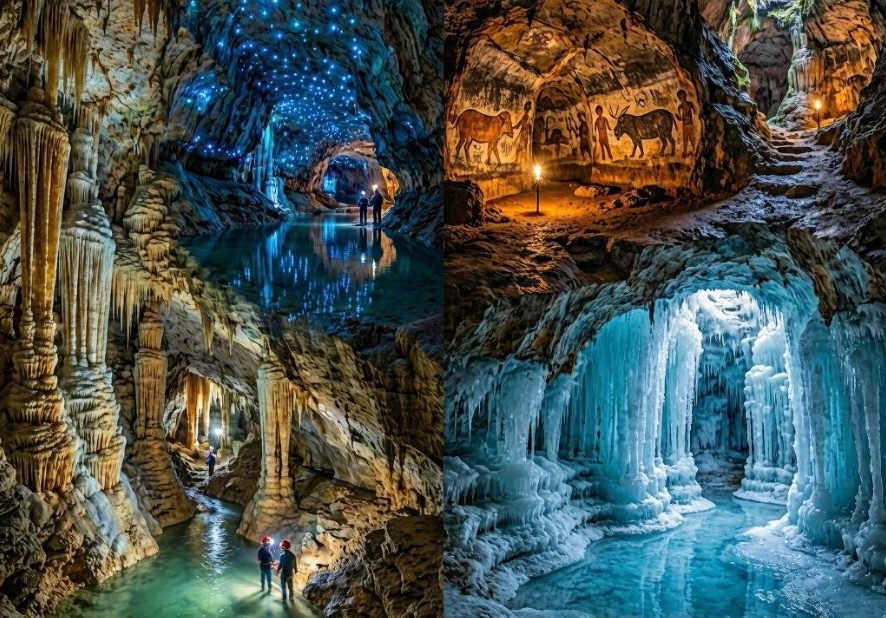
- Karst caves: formed in soluble rock such as limestone and dolomite
- Lava caves: formed as lava flows cool and solidify
- Ice caves: created in consistently cold conditions
- Erosional caves: formed by the action of water and wind
The World's Most Impressive Caves
Son Doong: A Giant of the Underground World
Son Doong Cave, one of the planet's most famous caves, is considered one of the largest in the world by volume.
Its interior can support its own ecosystems, including clouds, underground rivers, and even sections of forest. The scale of the space is so vast that entire city blocks could fit inside it.
Postojna Cave: A Classic Caving Destination
Postojna Cave is one of Europe's most visited caves. It is known for its extensive tunnels and well-developed visitor infrastructure.
Visitors can travel through it on an underground railway, making it accessible even to those without caving experience.
Mammoth Cave: America's Underground Giant
It is home to the world's longest known cave system.
Its passages extend for hundreds of kilometres and are still being explored today. The system includes numerous levels, corridors, and underground rivers.
Waitomo: Glowing Ceilings
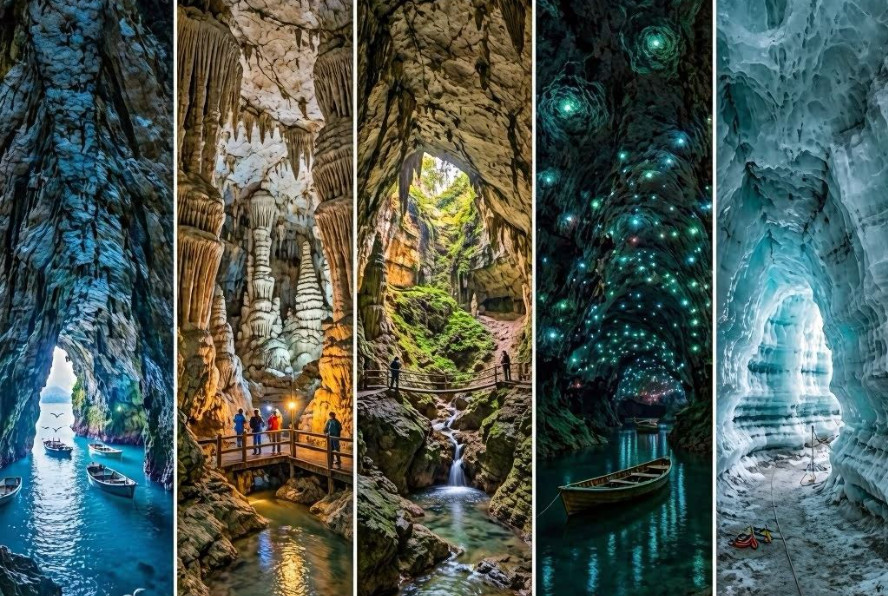
Here, you can observe a unique phenomenon: glowing larvae that create the effect of a starry sky underground.
It is one of the world's most unusual cave systems, where bioluminescence turns the ceilings into a living map of light.
Popular articles
Saddle Up! Russia’s Best Horseback Riding Tours Japan’s Lesser-Known and Fascinating IslandsUnderground Ecosystems
Caves are not only geological structures but also unique ecosystems. They are home to species adapted to complete darkness and limited resources.
Some organisms have lost their sight but developed other senses that allow them to navigate in absolute darkness.
Typical Cave Life Forms
- Bats
- Blind fish and crustaceans
- Cave insects
- Microorganisms that feed on minerals
Hazards and Features of Caving Tourism
Visiting caves requires care and preparation. Despite the visitor-friendly nature of some sites, underground environments remain potentially dangerous.
The main risks are disorientation, slippery surfaces, and sudden changes in temperature and humidity.
Key Safety Measures
- Using a protective helmet and lights
- Staying only on marked routes
- Visiting complex systems with a guide
- Checking weather conditions for karst caves
Ice Caves: Temporary Crystal Worlds
Ice caves are especially striking because of their ever-changing nature. They form in consistently cold conditions and can change significantly depending on the season.
Light reflecting from the icy walls creates a blue glow, enhancing the sense of an otherworldly space.
Caves as Historical Archives
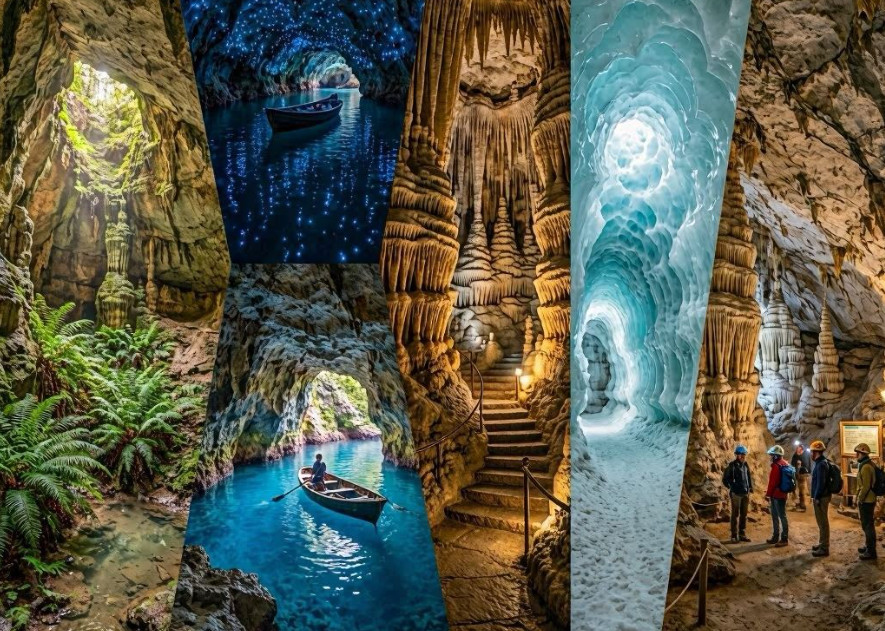
Many caves served as shelters for ancient people. Archaeologists have found traces of settlements, cave paintings, and artifacts preserved by the stable microclimate.
In this way, caves are not only natural sites but also repositories of human history.
Tourism and Infrastructure Development
Modern visitor routes make caves accessible to a wide audience. Lighting, walkways, and transport systems allow underground spaces to be explored safely.
However, infrastructure development requires a balance between accessibility and protecting the fragile natural environment.
Conclusion: Another World Beneath Our Feet
Caves are a parallel world hidden beneath the Earth's surface. They bring together geology, biology, and history in a single system, creating unique natural formations.
From vast cave systems to glowing underground chambers and extensive karst complexes, the subterranean world remains one of the planet's most mysterious and least explored realms.
Descending into a cave is more than simply a journey downward; it is a transition into a different geography, where time, light, and space follow entirely different rules.