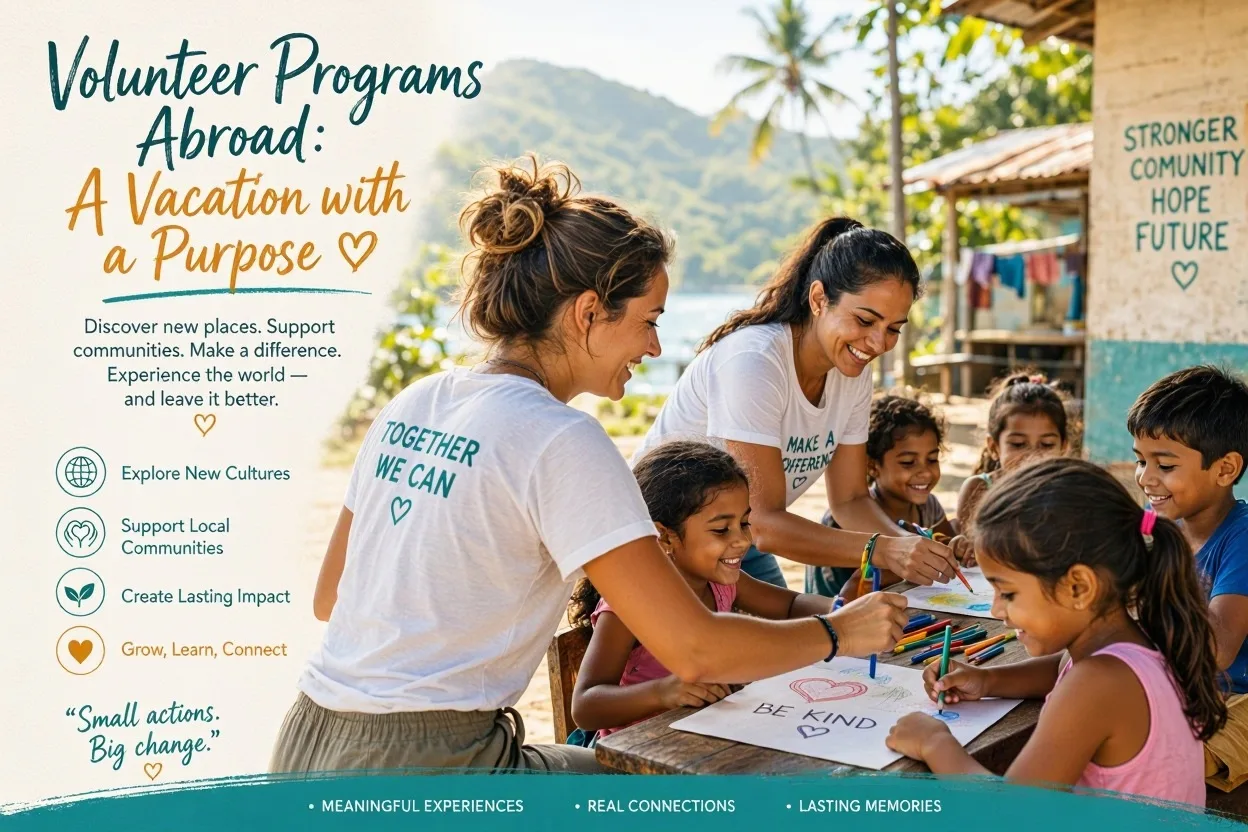
Traveling abroad offers opportunities to explore unfamiliar cultures, discover remarkable landscapes, and meet new people. However, some travelers want their journeys to contribute to something beyond personal enjoyment. International volunteer programs provide opportunities to support community initiatives, environmental projects, and nonprofit organizations while experiencing life in another country.
Often described as voluntourism, this approach combines elements of travel and volunteer service. When organized responsibly, it can create meaningful experiences for participants while supporting genuine local needs.
What Are International Volunteer Programs?
Volunteer programs abroad connect travelers with organizations seeking assistance on specific projects. Activities may involve environmental conservation, community development, education support, or practical work.
Programs range from short placements lasting several days to longer commitments extending over several months.
Some opportunities provide accommodation and meals, while others require participants to cover their own living expenses and program fees.
Popular Types of Volunteer Opportunities
Environmental Conservation
Conservation projects may involve habitat restoration, beach cleanups, reforestation, wildlife monitoring, or removing invasive plants.
These programs can appeal to travelers interested in nature and environmental protection. However, responsible organizations should follow scientific guidance and avoid activities that disturb wildlife unnecessarily.
Community Development
Community initiatives sometimes seek volunteers for gardening, facility maintenance, administrative assistance, or locally directed improvement projects.
The most effective programs work with residents to identify priorities rather than allowing visitors to decide what communities need.
Education and Skills-Based Volunteering
Qualified volunteers may contribute professional knowledge in areas such as technology, language instruction, communications, or nonprofit administration.
Teaching and other specialist roles should require appropriate qualifications, supervision, and safeguards.
How to Choose an Ethical Volunteer Program
Not every volunteer opportunity produces positive results. Some organizations prioritize attracting paying travelers over delivering sustainable benefits to local communities.
Before registering, investigate how the program operates and who benefits from its activities.
Look for organizations that:
- Work under local leadership and community direction.
- Clearly explain project objectives and expected outcomes.
- Provide transparent information about program fees.
- Match volunteer responsibilities with relevant skills.
- Maintain appropriate safeguarding procedures.
- Measure the long-term impact of their work.
Be cautious of programs that encourage unqualified visitors to perform specialized work or offer unnecessary direct contact with vulnerable children.

How Much Does Volunteering Abroad Cost?
Although volunteers provide unpaid assistance, international placements are not always free.
Expenses may include registration fees, accommodation, meals, transportation, insurance, visas, and personal spending.
Some nonprofit organizations offer low-cost placements, while structured programs with extensive support may charge considerably more.
Request a detailed explanation of how fees are used before making a payment.
Popular articles
Tourist Season 2020: When Does It Open and What Are the Prospects? Japan’s Lesser-Known and Fascinating IslandsCheck Visa and Legal Requirements
Volunteer activities may be subject to immigration and employment regulations even when participants receive no salary.
A tourist visa does not automatically authorize volunteer work in every country.
Before traveling, confirm the appropriate visa category, permitted activities, length of stay, and any registration requirements with official immigration authorities.
Programs should provide clear guidance without encouraging participants to misrepresent the purpose of their visit.
Prepare for Health and Safety Considerations
Volunteer placements may involve unfamiliar climates, physical activities, remote locations, or different healthcare systems.
Research destination-specific health recommendations and obtain appropriate vaccinations or medical advice when necessary.
Travel insurance should cover the intended volunteer activities, including any manual work or outdoor tasks.
Ask the organization about emergency procedures, supervision, accommodation standards, and access to medical assistance.
Balance Volunteering with Tourism
A volunteer trip can still include opportunities for sightseeing and cultural exploration.
However, project responsibilities should take priority during agreed working hours. Treating volunteering as a casual tourist attraction can undermine the organization's goals.
Choose a placement that provides realistic free time and clearly communicates expectations before arrival.

What Skills Can Volunteers Gain?
Responsible international volunteering can help participants develop communication, adaptability, teamwork, and intercultural awareness.
Longer placements may also provide experience in project coordination, environmental fieldwork, or nonprofit operations.
Nevertheless, personal development should be considered a secondary benefit rather than the primary justification for a project.
Alternatives to Traditional Voluntourism
Travelers who cannot commit to a structured placement can still support destinations responsibly.
Choosing locally owned accommodation, purchasing services from community businesses, supporting credible conservation organizations, and participating in legitimate local initiatives may create positive economic or environmental contributions.
In some circumstances, donating to experienced local organizations is more useful than participating in a short volunteer placement.
Conclusion: Make Your Travel Contribution Meaningful
Volunteer programs abroad can transform an ordinary vacation into an opportunity for cultural exchange and purposeful participation.
However, good intentions alone do not guarantee positive outcomes. Ethical program selection, realistic expectations, appropriate skills, and respect for local leadership are essential.
By choosing responsible organizations and placing community needs first, travelers can enjoy meaningful international experiences while contributing to projects designed for lasting benefit.